How Much Cash to Bring to Japan (And Where Cards Fail)
Bring ¥10,000–30,000 for a week and top up at 7-Eleven. Here's exactly where cards work, where they don't, and which ATMs take foreign cards.
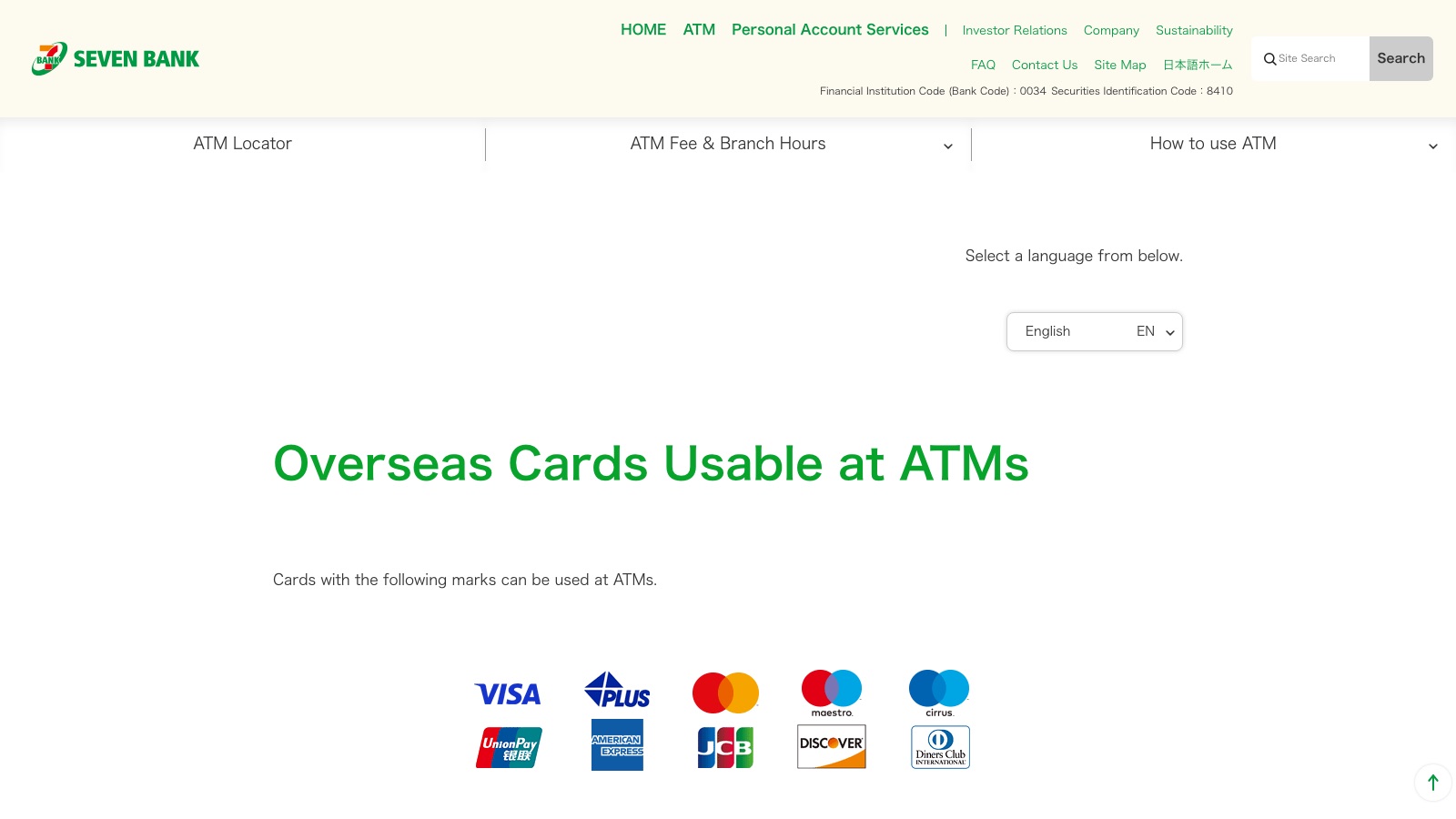
Screenshot: Overseas Cards Usable at ATMs — Seven Bank (accessed 2026-09-28)
On this page
Disclosure Some links on this page are affiliate links. If you buy through them we may earn a small commission at no extra cost to you. It never changes what we recommend.
You walked fifteen minutes for that tiny ramen counter, and there's a handwritten sign by the door: 現金のみ. Cash only.
Bring ¥10,000–30,000 in cash for a week, and top the rest up from an ATM inside any 7-Eleven. That's the whole answer.
Your card handles hotels, trains, department stores and convenience stores. Cash handles the small, old and rural stuff: shrine offering boxes, standing bars, market stalls, local buses. Get yen from a 7-Eleven or post office ATM rather than an airport exchange counter — same card, no queue.
💸 How much cash should you actually carry?
Think in daily terms, not trip terms. Around ¥3,000–5,000 a day in your wallet covers the things that refuse plastic — a temple entry, a bowl of noodles, a coin locker, a bus fare.
For a one-week trip that's ¥10,000–30,000. The lower end if you're staying in Tokyo and Osaka hotels. The higher end if you're heading to the mountains, hot springs, or anywhere with a single-carriage train line.
Here's the thing people get wrong in both directions. Old guides say "Japan is cash-only, bring a brick of yen." Newer ones say "cards work everywhere now, don't bother." Neither is right.
The Tokyo Metropolitan Government's own survey put the city's cashless payment ratio at 62.2% by value in FY2025. Flip that around: nearly 38 yen in every 100 spent in Tokyo — the most card-friendly city in the country — is still a banknote. And JNTO says it plainly on its own currency page: "Japan, however, is very much a cash-based society, so keep cash on you."
So you need cash. You just don't need much of it at any one time.
Don't bring yen from home unless your bank gives a genuinely good rate. There's a 7-Eleven within walking distance of nearly every hotel you'll stay in.
💳 Where your card works without thinking about it
Payments are not the thing that ruins trips to Japan anymore. When the Japan Tourism Agency surveyed 4,189 departing visitors at five airports, 51.1% said they had no problems at all — and the top complaints were a lack of public bins (21.9%), talking to staff (15.2%) and crowds (13.1%). Card trouble didn't top that list.
Tap away at:
- Hotels and guesthouses with an online booking
- Convenience stores — 7-Eleven, Family Mart, Lawson
- Shinkansen and airport express trains. JNTO specifically flags long-distance tickets like the Narita Express and shinkansen as card-friendly
- Department stores, drugstores, Uniqlo, Don Quijote
- Chain restaurants and cafés
- Taxis in cities
One warning from that same JNTO page, because it catches people on day one: you can't always use a card for short-distance train and subway fares. Long-distance, yes. The two-stop hop across town, often no.
Which brings us to the fix. Load a Suica or Pasmo IC card — the tappable transit card — and use that for trains, buses and vending machines. JNTO recommends it for exactly this reason. Kyoto's transport bureau tells riders to load the card at a station before boarding, which is good advice everywhere.
🍜 Where cards still fail
This is the list worth screenshotting.
Shrines and temples. Offering boxes take coins, full stop. Entry desks at older temples are often a person with a cash tray, and goshuin stamp books are almost always cash.
Small izakaya and ramen counters. Six seats, one chef, no terminal. The better the place looks from outside, the more likely it is.
Food stalls and festival stands. Yatai at a summer festival, takoyaki at a market, the grilled corn guy — cash.
Local buses. Kyoto City's official rider guide is blunt about it: "Credit, debit, and cash cards cannot be used." You pay with cash, a day pass, or a transit IC card, and the adult flat fare in the city zone is ¥230 as of 2026-09. Rural bus operators are stricter still.
Some ryokan and family minshuku. If the booking was by phone or email rather than a big platform, ask when you reserve.
Coin lockers, small shrines' parking, some onsen. Have ¥100 and ¥500 coins.
My honest read: the risk isn't going broke, it's standing at a counter unable to pay for a ¥900 lunch. ¥5,000 in your pocket removes that entirely.
🏧 Which ATMs take a foreign card?
Two networks matter, and both put English on the screen.
| Seven Bank (in 7-Eleven) | Japan Post Bank | |
|---|---|---|
| Card brands | Visa/PLUS, Mastercard/Maestro/Cirrus, UnionPay, American Express, JCB, Discover, Diners Club | Visa, PLUS, Mastercard, Maestro, Cirrus, JCB, UnionPay, Discover |
| Per withdrawal | ¥100,000 (¥30,000 if your card has no chip) | ¥50,000 |
| Hours | 24/7 for Visa and Mastercard; UnionPay, JCB and Discover 00:10–23:50; Amex and Diners 00:05–23:55 | Post office ATMs 07:00–23:00 Mon–Sat, 07:00–21:00 Sun and holidays; Family Mart machines 00:05–23:55 |
| Machine fee | Varies by card brand — shown on screen before you confirm | ¥220 per withdrawal for certain foreign-issued cards, as of 2026-09 |
| Locations | Over 28,000 ATMs | Post offices, stations and supermarkets nationwide |
| Languages | English plus Chinese, Korean, Thai, Malay, Indonesian, Vietnamese, French, German, Portuguese | English available |
A few things this table settles.
Seven Bank is the easier default. It's open all night for Visa and Mastercard, it lets you pull ¥100,000 in one go, and it's inside a shop that's open anyway. Japan Post's ¥50,000 per-transaction ceiling means two withdrawals — and two fees — if you want more.
Amex is the outlier. Seven Bank lists American Express; Japan Post's international service page doesn't. If Amex is your only card, plan around 7-Eleven, and carry a Visa or Mastercard as backup.
JCB works at both. If you happen to hold a JCB card, it's a genuinely useful spare — accepted at both ATM networks and widely accepted in shops, since it's a Japanese brand.
Two small traps. Seven Bank notes that even cards showing the right logo may not be accepted, so the second card in your wallet is not paranoia — it's the plan. And Narita Airport's own ATM page says Seven Bank machines after security cap withdrawals at ¥30,000, so withdraw in the arrivals hall, not at the gate on the way home.
When the machine asks whether to bill you in yen or your home currency, choose yen. Your own bank's rate usually beats the machine's conversion.
❓ Quick questions
Should I exchange money before flying?
Only if your home bank offers a rate you like. JNTO notes every major airport has exchange counters in arrivals, and there are ATMs there too — so you're never stuck either way.
Can I pay with my phone?
In cities, often yes — the same terminals that take tap-to-pay cards take a phone. But treat it as a bonus, not a plan. The cash-only ramen counter doesn't have a terminal for either.
What if an ATM rejects my card?
Try the other network before you panic. Seven Bank and Japan Post run on different systems, and a card refused by one sometimes works in the other. Tell your bank you're travelling before you fly.
Do I really need coins?
Yes. Offering boxes, coin lockers, small shrines and vending machines all want ¥100 and ¥500 coins. A small coin purse is the single most useful ¥500 you'll spend.
Before you fly
- Bring or withdraw ¥10,000–30,000 for a week; keep ¥3,000–5,000 on you each day
- Use your card for hotels, shinkansen, convenience stores and department stores
- Keep cash for shrines, small restaurants, food stalls, local buses and rural inns
- 7-Eleven ATMs are the default: 24/7 for Visa and Mastercard, up to ¥100,000 per withdrawal
- Carry a second card on a different network — Visa or Mastercard if your main one is Amex
One thing to do now: tell your bank the dates you'll be in Japan, and check your card has a chip. Then find the 7-Eleven nearest your first hotel on the map and remember it. Fees and hours can change, so check the official Seven Bank and Japan Post pages before you travel.
Sources
- Overseas Cards Usable at ATMs — Seven Bank (accessed 2026-09-28)
- How to withdraw cash in Japan using a foreign card — Seven Bank (accessed 2026-09-28)
- International ATM Service — Japan Post Bank (accessed 2026-09-28)
- Credit Cards in Japan — Japan National Tourism Organization (JNTO) (accessed 2026-09-28)
- Japan Currency Exchange — Japan National Tourism Organization (JNTO) (accessed 2026-09-28)
- Kyoto City Bus & Subway Information Guide: How to Take the Bus — Kyoto City Transportation Bureau (accessed 2026-09-28)
- ATM (Automatic Teller Machines) — Narita International Airport (accessed 2026-09-28)
- Tokyo’s Cashless Payment Ratio Reaches 62.2% in FY2025 — Tokyo Metropolitan Government (accessed 2026-09-28)
- 訪日外国人旅行者の受入環境に関する調査結果 — Japan Tourism Agency (MLIT) (accessed 2026-09-28)

Keep reading
Coin Lockers in Japan: Sizes, Prices and What If Full
What coin lockers in Japan cost by size, whether Suica works, the three-day rule, and exactly what to do when every locker…
Coin Lockers in Japan: Sizes, Prices and What If They’re Full
Coin locker sizes and prices in Japan from official railway and airport pages, plus the fallback ladder for when every locker is…
Narita Express vs Skyliner vs Limousine Bus: Which to Book
Skyliner, Narita Express or the limousine bus? Fares, times and luggage compared, then matched to the Tokyo neighbourhood you actually booked.