Ekiben Guide: Japan’s Best Train Station Bento by Region
Ekiben are Japan's train station bento. Here are the regional classics, where to buy them at Tokyo Station, and how to eat one politely on the Shinkansen.
On this page
Disclosure Some links on this page are affiliate links. If you buy through them we may earn a small commission at no extra cost to you. It never changes what we recommend.
This article contains affiliate links. We may earn a commission at no extra cost to you.
It's 11:40 at Tokyo Station. Your Shinkansen to Kyoto leaves at 12:03, and you haven't had lunch. Do what most Japanese travellers do: walk to Ekibenya Matsuri inside the ticket gates, pick an ekiben, and eat it at your window seat while the city falls away behind you.
In three lines:
- Ekiben (駅弁, "station bento") are boxed meals made for train journeys. Each region has its own, and Japanese travellers plan trips around them.
- Tokyo Station's Ekibenya Matsuri carries about 150 kinds from all over Japan. It opens at 5:30 and closes at 22:00.
- Buy before you board. Most Tokaido Shinkansen trains stopped selling food from a trolley in 2023.
🍱 What is an ekiben, and why do Japanese people love them?
In short, it's a regional meal sold for eating on the train, and the box is part of the fun.
The usual story is that the first one went on sale at Utsunomiya Station on 16 July 1885. It was two rice balls with pickled plum and two slices of pickled radish, wrapped in bamboo leaf. JR East's own magazine tells it this way, and it also notes that other cities have their own claims to being first.
Here's the local logic. In Japan a train trip isn't just getting from A to B. Eating the food of where you're going, or where you've just been, is part of the trip. Ekiben fans (ekiben-tetsu, 駅弁鉄) even collect the wrappers and the containers.
That's why ekiben are a bit different from a supermarket bento. Many come in ceramic pots, wooden boxes or shaped containers, and the recipes have barely changed in decades.
🗾 Which regional ekiben are worth trying?
Below are five classics with long histories, from the north of Japan down to Kobe. Prices are as of 2026-10, taken from each maker's official page.
| Ekiben | Where it's from | Why people buy it | Price (as of 2026-10) |
|---|---|---|---|
| Toge no Kamameshi (峠の釜めし), Oginoya | Yokokawa, Gunma (on the way to Karuizawa) | Rice with chicken, chestnut and quail egg in a round pot-shaped container | ¥1,500 |
| Shiumai Bento (シウマイ弁当), Kiyoken | Yokohama | Five of Kiyoken's famous shumai dumplings plus classic side dishes. On sale since 1954 | ¥1,180 |
| Gyuniku Domannaka (牛肉どまん中), Shinkineya | Yonezawa, Yamagata | Seasoned minced beef and simmered beef on Yamagata rice | ¥1,620 |
| Hipparidako Meshi (ひっぱりだこ飯), Awajiya | Kobe area | Octopus and conger eel on soy-flavoured rice, in a ceramic octopus-pot container | Check the official site |
| Ikameshi (いかめし), Ikameshi Abe Shoten | Mori, Hokkaido | Two small squid stuffed with rice and simmered in a sweet soy sauce | Check the official site |
The kamameshi has the best story. Oginoya opened in 1885 and created Toge no Kamameshi in 1957 at Yokokawa. People used to complain the original pottery pot was heavy, so Oginoya made a lighter pulp version from sugarcane fibre. It won a Good Design Award in 2013.
Prices change often. Oginoya's own pages list ¥1,500, but a JR East article from January 2025 listed ¥1,400. Treat any price as a rough guide and expect the shop tag to have the final say.
Short on time and only taking one bento? The Shiumai Bento is the one I'd send you for. It's eaten cold on purpose, so it holds up well on a long ride. At ¥1,180 it's also one of the cheaper classics. It's also the bento Yokohama people buy for themselves, not only for visitors.
Love beef? Then go for Gyuniku Domannaka. It's like a gyudon (beef bowl) in a box, and it's very easy to like.
Some ekiben also come out in seasonal or limited versions. Right now Awajiya is selling a white Hanshin Tigers edition of its octopus-pot bento, made with the baseball team, for ¥1,980 as of 2026-10. It's sold by reservation from 7 to 20 October, and shop sales are planned from 21 October.
🚉 Where do you buy ekiben at Tokyo Station?
The easy answer: Ekibenya Matsuri (駅弁屋 祭), on the first floor inside the JR ticket gates.
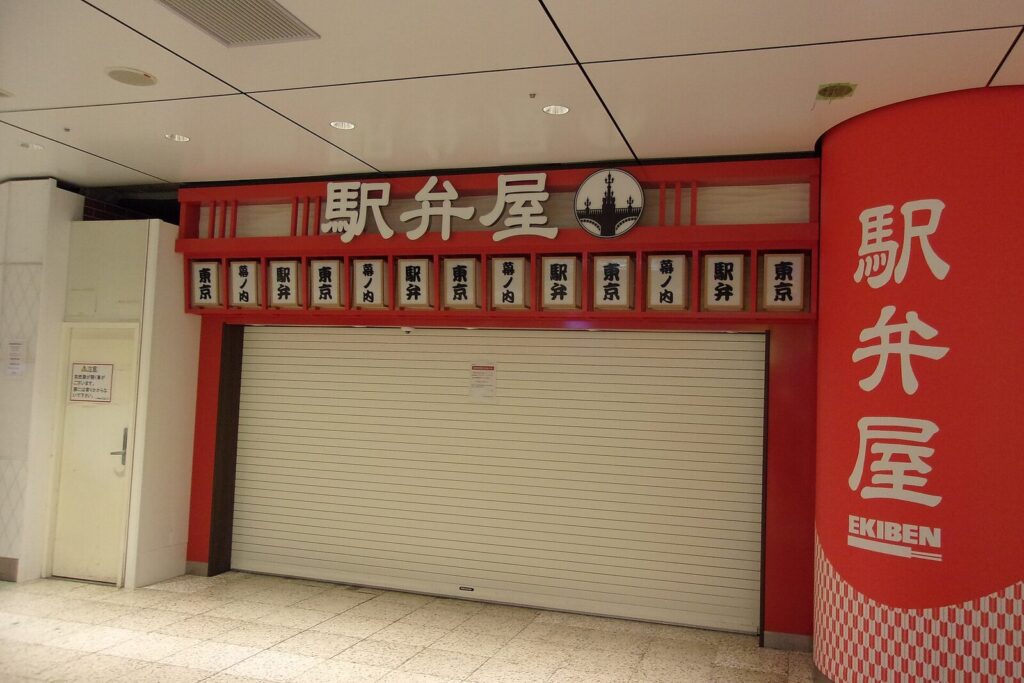
JR East's guide puts it in the Gransta Tokyo area, along the central passage that runs toward the Shinkansen gates. It's between the stairs to platforms 5–6 and 7–8, across from the HANAGATAYA shop. It's open every day from 5:30 to 22:00, and it takes cash, credit cards and Suica.
The official site says there are about 150 kinds, and that the range changes with supply and the time of day. Some travel guides say 170 or even 200. The official number is the one to go by.
Arrive 15–20 minutes before your train. That is the tip people miss. The shop gets very busy around lunch and before evening departures. Some boxes are also put out only at certain times, so the most famous ones can sell out by late morning.
If the line is too long, JR East says its sister shop Ekibenya Odori (駅弁屋 踊), also in Gransta Tokyo, sells Matsuri's top 10 bestsellers.
Leaving from another city? Most big Shinkansen stations have ekiben counters inside the gates, and the local ekiben is normally right at the front. Oginoya, for example, sells its kamameshi at Karuizawa Station, and through other sellers at Tokyo, Shinjuku and Omiya.
🚄 Can you buy food on the Shinkansen?
On most Tokaido Shinkansen trains (Tokyo–Nagoya–Kyoto–Osaka), you can't if you're in an ordinary car. Buy before you board.
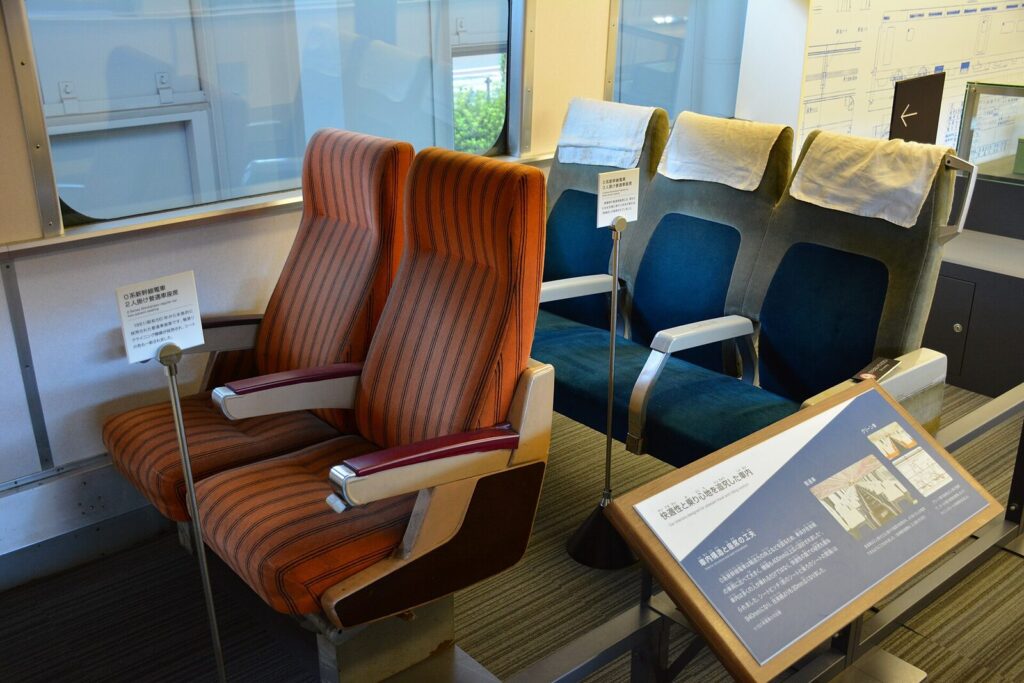
JR Central ended trolley sales on all Nozomi and Hikari trains on 31 October 2023. Its reasons were that station shops now have a wide range, more passengers bring their own food, and many people want a quieter train.
Two things replaced it:
- More vending machines on the platforms at Nozomi stops, selling things like drip coffee and ice cream
- Mobile ordering in the Green Car (first class): you scan the QR code at your seat with your phone, and staff bring your order to you. This doesn't run on Kodama trains
So if you're in an ordinary seat, the ekiben shop is your restaurant. I think that's actually a good thing. You choose from 150 boxes instead of one trolley menu.
🥢 Is it OK to eat on the train in Japan?
Yes, on the Shinkansen and on long-distance limited express trains. That's exactly what ekiben are for. Every seat has a fold-down tray.
When ITmedia asked about smelly food on the Shinkansen, JR Central said it has no rule of its own about what you can eat. Some station shops, though, ask people not to eat their strongest-smelling foods on board.
So the local manners come down to three things:
- Think about the smell. A normal ekiben is fine. Strong garlic, curry or hot pork buns are better eaten on the platform.
- Take your rubbish with you. Put the box and chopsticks back in the bag and carry it off the train.
- Save eating for long-distance trains. People don't eat on packed city trains and the subway. Have your onigiri before you get on, or wait for the Shinkansen.
One small extra: say "itadakimasu" (いただきます, a short thanks before eating) quietly to yourself. Nobody expects it from a visitor, but it's a nice touch.
❓ FAQ
How much does an ekiben cost?
The classics in this guide cost between ¥1,180 and ¥1,980 as of 2026-10. You can expect most to be somewhere in that range.
Do I need to heat an ekiben?
No. Most are made to taste good at room temperature. Kiyoken sells its Shiumai Bento as a room-temperature product, for example.
Can I buy ekiben without a train ticket?
Ekibenya Matsuri is inside the ticket gates, so you need a ticket to get in. Some ekiben are also sold outside the gates and in department stores, such as Oginoya's kamameshi at several Takashimaya stores.
Are there vegetarian ekiben?
Not many. Most use fish or meat stock. Ask the staff, or pick a box that is mostly vegetables and onigiri.
Can I keep the container?
Yes. Many people take the ceramic kamameshi pot or the octopus pot home as a souvenir.
🧳 Quick recap
- Ekiben are regional train bento, and eating one is part of the trip for Japanese travellers.
- At Tokyo Station, Ekibenya Matsuri (5:30–22:00, about 150 kinds) is the place. Arrive 15–20 minutes early.
- On most Tokaido Shinkansen trains you can't buy food in ordinary cars, so buy before you board.
- Eat on the Shinkansen, not on the subway, keep strong smells off the train, and take your rubbish with you.
- Before you fly, book your Shinkansen seats or rail pass so the window seat is ready, and if you can't wait for your first taste of Japan, a box of Japanese snacks at home is a nice warm-up.
Get the taste of Japan sent home

TokyoTreat — Japan-only snacks, monthly
- In the boxJapan-exclusive snacks, a drink and a snack guide
- Ships toWorldwide
- PlanMonthly, a new theme each time

Sakuraco — traditional sweets and tea
- In the box20 Japanese sweets, a tea pairing and a home-goods item
- Ships toWorldwide
- PlanMonthly, a new theme each time
Show sources
- 駅弁屋 祭 — JR東日本クロスステーション (accessed 2026-10-12)
- 東京駅にある『駅弁屋 祭』は、全国各地の人気有名駅弁や東京駅ならではの期間限定駅弁など150種類以上取りそろえる大人気駅弁専門店です。 — JR東日本 (JR East) (accessed 2026-10-12)
- 駅弁の歴史と全国の名物駅弁 — JR東日本 (JR East) (accessed 2026-10-12)
- 峠の釜めし (eco-friendly container) — Oginoya (accessed 2026-10-12)
- Founded in 1885, birthplace of 峠の釜めし (Yokokawa Main Store) — Oginoya (accessed 2026-10-12)
- シウマイ弁当 — 崎陽軒 (Kiyoken) (accessed 2026-10-12)
- 新杵屋 公式サイト — 新杵屋 (Shinkineya) (accessed 2026-10-12)
- 阪神タイガースひっぱりだこ飯(白)登場! — 淡路屋 (Awajiya) (accessed 2026-10-12)
- JR東海、東海道新幹線の車内ワゴン販売を10月末で終了 — Impress Watch (accessed 2026-10-12)
- 新幹線で「たこ焼き」はNG? JR東海の見解は — ITmedia ビジネスオンライン (accessed 2026-10-12)

Keep reading
Akihabara vs Nakano Broadway vs Ikebukuro: Anime Shopping Guide
Akihabara for figures and cards, Nakano Broadway for retro finds, Ikebukuro for female-oriented fandom. Here's how to pick, plus the new tax…
Sencha vs Hojicha vs Genmaicha: Japan’s Everyday Teas Explained
Sencha, hojicha or genmaicha? What Japanese people really drink at home, how much caffeine each one has, what 100 g costs and…
Shiroi Koibito vs Royce vs LeTAO: Which to Bring Home
Shiroi Koibito, Royce or LeTAO? Compare price, shelf life, heat, and where to buy in Hokkaido or Tokyo, so the right sweet…