Where to Charge Your Phone in Japan: Trains, Airports & Rentals
Where to charge your phone in Japan on a long day out: which bullet train seats have sockets, free airport charging, and ChargeSPOT rental prices.
On this page
Disclosure Some links on this page are affiliate links. If you buy through them we may earn a small commission at no extra cost to you. It never changes what we recommend.
This article contains affiliate links. We may earn a commission at no extra cost to you.
It's 3 p.m. in Kyoto. You've had Google Maps open since breakfast, taken 200 photos of one temple gate, and your battery just went red. Good news: Japan makes charging easy. Your train seat, the airport and the battery rental stand in the nearest convenience store will all get you back to full.
The short version:
- Newer bullet trains have a socket at every seat. On older ones, book a window seat.
- Narita and Haneda have free charging spots in the terminals.
- On a long day out, a rented ChargeSPOT battery costs ¥500 for 3–6 hours (as of 2026-10), and you can return it at any stand.
📱 How fast will a sightseeing day drain your phone?
This tells you when you'll need a charge, so you can plan for it.
Here's a rough planning guide, not a lab figure. Maps navigation keeps your screen on and your GPS working all the time, and that is what drains a battery fastest.
| What you're doing | Rough drain per hour |
|---|---|
| Phone in pocket, messages only | A few percent |
| Photos and browsing on and off | Around 5–10% |
| Turn-by-turn walking navigation, screen on | Around 10–15% |
Leave at 9:00 with a full battery and lean on maps all day, and you can be in the red by mid-afternoon. A phone that's a couple of years old gets there sooner.
My take: don't try to save battery. Plan one top-up instead. A seat on the train at lunchtime or a rented battery after lunch is enough for most days.
🚄 Which Shinkansen and express seats have a socket?
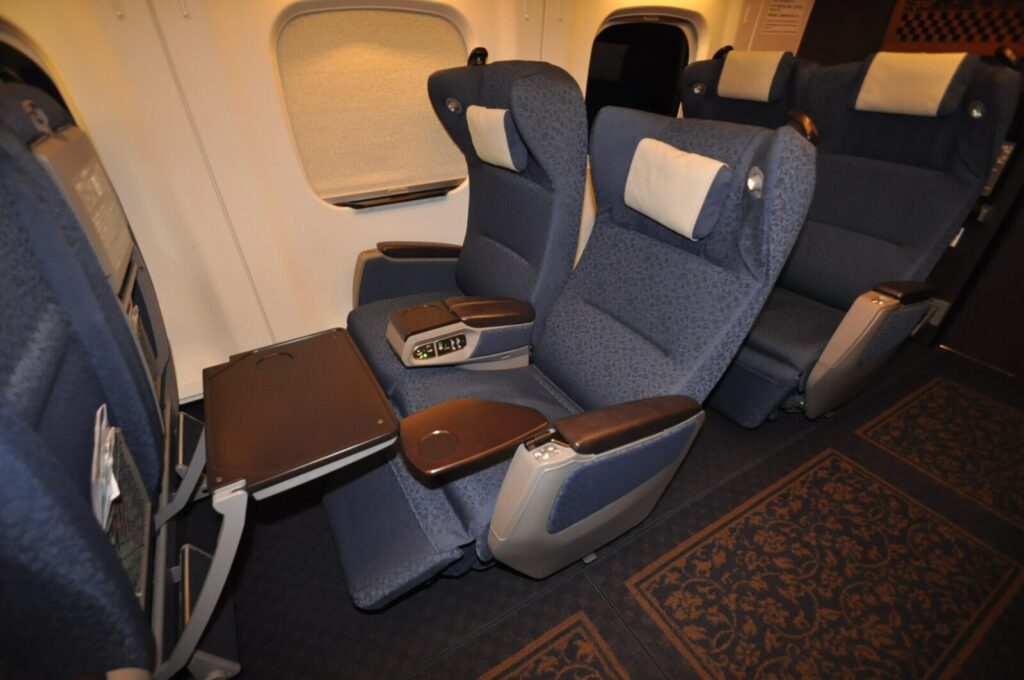
This one surprises people: some bullet trains have a socket at every seat, while on others only certain seats get one. Here's how it works on the trains visitors ride most.
| Train / line | Ordinary car | Green Car (first class) |
|---|---|---|
| N700S (Tokaido/Sanyo: Tokyo–Kyoto–Osaka) | Every seat | Every seat |
| N700A / N700 (same line, older trains) | Window seats, plus the very front and back rows | Every seat |
| E7 / W7 (Hokuriku: Tokyo–Kanazawa) | Every seat | Every seat, Gran Class too |
| E5 (Tohoku: Tokyo–Sendai–Aomori) | Front and back rows and window walls. Trains built from 2016 have them at every seat | Every seat |
| E6 (Akita) | Front and back rows | At the seats |
| E8 (Yamagata, from 2024) | Every seat | Every seat |
| Limited express E353 (Azusa/Kaiji, Tokyo–Matsumoto) | Every seat | Every seat |
| Limited express HC85 (Hida, Nagoya–Takayama) | Every seat | Every seat |
JR Central's own seat guide puts it plainly for the N700S: "Electric outlets for mobile devices are located at every seat." It also says the train type on a given service "may be altered without notice", so you won't always know which one you'll get.
So here's my simple rule for Tokyo–Kyoto–Osaka: book a window seat (A or E). Whether you get an N700S or an older N700A, a window seat comes with a socket either way.
On the Hokuriku line to Kanazawa, it doesn't matter where you sit. JR West's page notes these were the first Shinkansen ordinary cars with a socket for every seat.
Sockets are Japanese two-pin plugs (Type A). If your charger has a different plug, bring an adapter.
✈️ Where can you charge at Narita and Haneda airports?
Both big Tokyo airports have free charging. It's handy for your first evening, or for topping up before a long flight home.
Narita: the airport says outlets in "a number of locations in the terminals" are "available free of charge". Look for socket poles and tables with sockets built in. There are also ChargeSPOT rental stands, open 24 hours, in the area before security in every terminal.
Haneda: "There are free charging corners in each terminal," per the airport's own page. Terminal 3, the main international terminal, has them on floors 1, 2 and 3, including airside past security. Haneda also lists ChargeSPOT stands across all three terminals, including the Terminal 3 departures floor by check-in counters L and D.
One thing to check before you go: Haneda notes that USB-C users at some Terminal 3 corners should bring their own adapter. If your phone charges by USB-C, keep a plug and cable in your hand luggage.
🔋 ChargeSPOT: how much does a rental battery cost?
At some point, you'll be far from any train seat. That's when ChargeSPOT, the battery-rental stands you'll see in stations, shops and convenience stores, does the job.
You scan the QR code on the stand with the app and a battery comes out. Charge as you walk, then drop it at any ChargeSPOT stand, not only the one you rented from. The operator says it has 62,879 stands in Japan (as of June 2026).
Prices as of 2026-10, from ChargeSPOT's official price table:
| Rental time | Price |
|---|---|
| Under 30 minutes | ¥165 |
| 30 min – under 1 hour | ¥330 |
| 1 – under 3 hours | ¥430 |
| 3 – under 6 hours | ¥500 |
| 6 – under 12 hours | ¥570 |
| 12 – under 24 hours | ¥640 |
| Each extra 24 hours | +¥360 |
In trip terms, a battery from lunch until dinner costs about ¥500. That's less than a bottle of tea and a rice ball.
Return rules worth knowing:
- Return it within five days (120 hours). After that, the charge becomes a flat ¥4,080, which includes a ¥2,000 penalty. The same ¥4,080 applies if a battery is lost or damaged.
- One account can rent up to three batteries at once, which is good news for families.
- Some stands have special prices. The price shown when you rent is the one you pay.
Since June 2026, ChargeSPOT has been rolling out a faster battery: 8,000 mAh, up from 5,000, with USB-C and Lightning cables built in. Impress Watch reports it costs the same as the standard battery.
Travelers seem to like it. One App Store review from a tourist in Japan said, "I did not have to worry about my phone turning off!", and added that it "completely changed the mood of the entire trip." Another review, titled "Lifesaver," called it "super easy to use."
🏪 Can you charge at a konbini or café?
A konbini, or convenience store (コンビニ, konbini), isn't a place to plug in. It's a great place to rent a battery, though.
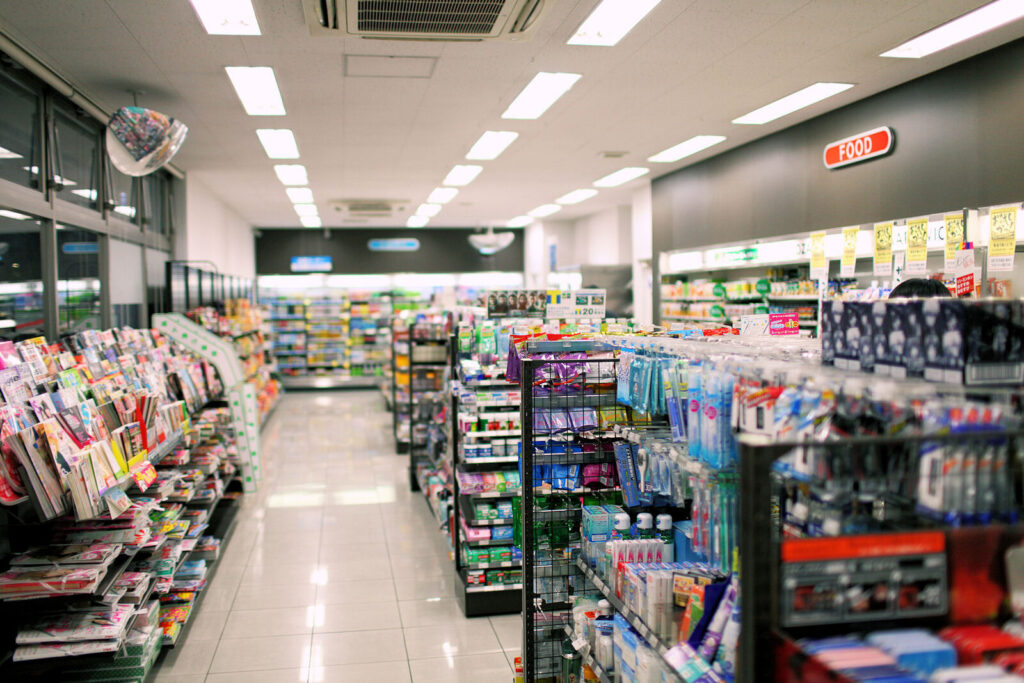
FamilyMart started putting ChargeSPOT stands in about 1,000 Tokyo stores in 2019. It pointed out that konbini sit close together, so renting at one and returning at another is easy. That's the local logic: the stand is wherever you happen to be buying a drink.
Cafés vary. Some have counter seats with sockets meant for customers. If a socket isn't clearly for customers, ask the staff before you plug in. It's polite, and it's how locals do it too.
❓ FAQ
Do I need a Japanese phone number to use ChargeSPOT?
Narita says you need the ChargeSPOT app or a supported payment app. Set it up at home on hotel Wi-Fi so it's ready when your battery drops.
Can I keep a ChargeSPOT battery overnight?
Yes. 12 to under 24 hours costs ¥640 (as of 2026-10). Just return it within five days.
Which bullet train seat should I book for charging?
On Tokyo–Kyoto–Osaka, book a window seat (A or E). You get a socket whether the train is an N700S or an older N700A.
Are airport charging spots free?
Yes. Narita and Haneda both offer free outlets or charging corners. The ChargeSPOT stands there are the paid option.
🧳 Your charging plan, in five lines
- Expect a maps-heavy day to drain your phone by mid-afternoon.
- Book a window seat on the Shinkansen. You get a socket on every train type.
- Use the free charging at Narita or Haneda on arrival and before your flight home.
- Install the ChargeSPOT app before you fly. A full afternoon costs ¥500 (as of 2026-10).
- Phone charged, seat booked: now pick the snacks that will keep you company on the train, and sort them before you fly.
Get the taste of Japan sent home

TokyoTreat — Japan-only snacks, monthly
- In the boxJapan-exclusive snacks, a drink and a snack guide
- Ships toWorldwide
- PlanMonthly, a new theme each time

Sakuraco — traditional sweets and tea
- In the box20 Japanese sweets, a tea pairing and a home-goods item
- Ships toWorldwide
- PlanMonthly, a new theme each time
Show sources
- 料金 | CHARGESPOT — INFORICH (CHARGESPOT) (accessed 2026-10-11)
- CHARGESPOT — INFORICH (CHARGESPOT) (accessed 2026-10-11)
- ChargeSPOT to Revise Minimum Rental Fee from May 1, 2025 — INFORICH (accessed 2026-10-11)
- Seats and Accommodation — Central Japan Railway Company (JR Central) (accessed 2026-10-11)
- 北陸新幹線「かがやき」 — JR West (JRおでかけネット) (accessed 2026-10-11)
- 「新幹線」でスマホやノートPCを充電するには? コンセントのある座席の探し方【2022年12月版】(3/3 ページ) — ITmedia PC USER (accessed 2026-10-11)
- 山形新幹線に新型E8系導入 最高300km/h 全席コンセント 2024年春に営業運転開始へ — 乗りものニュース (accessed 2026-10-11)
- 中央線の次期特急車両が登場 全席にコンセント E353系量産先行車 — 乗りものニュース (accessed 2026-10-11)
- JR東海に新型「発電機搭載特急電車」HC85系登場 「モハ」表記 「ひだ」「南紀」向け — 乗りものニュース (accessed 2026-10-11)
- Wi-Fi / Power outlet spaces — Narita International Airport Corporation (accessed 2026-10-11)
- Mobile battery rental service (ChargeSPOT) — Narita International Airport Corporation (accessed 2026-10-11)
- Device Charging — Haneda Airport (Japan Airport Terminal Co.) (accessed 2026-10-11)
- Mobile Battery Sharing Service CHARGESPOT — Haneda Airport (Japan Airport Terminal Co.) (accessed 2026-10-11)
- ファミリーマート、スマートフォン充電器シェアリングサービス「ChargeSPOT」を導入 — FamilyMart Co., Ltd. (accessed 2026-10-11)
- CHARGESPOT、急速充電対応の新型モバイルバッテリー — Impress Watch (accessed 2026-10-11)
- CHARGESPOT 自助租借移動電源 – App Store — Apple App Store (accessed 2026-10-11)

Keep reading
Holafly vs Airalo vs Ubigi Japan eSIM: Price per GB Compared
Holafly vs Airalo vs Ubigi for Japan, compared at their published prices as of 2026-11: cost per GB at 3, 10 and…
Can I Bring a Power Bank to Japan? ANA & JAL Rules for 2026
Yes: up to two power banks of 160Wh or less, in your carry-on only. Here's what changed on ANA and JAL in…
Working Remotely from Japan: Internet for Video Calls (2026)
Working remotely from Japan for a week? What upload speed Zoom needs, how far a 3 GB daily data cap goes, and…