Sencha vs Hojicha vs Genmaicha: Japan’s Everyday Teas Explained
Sencha, hojicha or genmaicha? What Japanese people really drink at home, how much caffeine each one has, what 100 g costs and where locals buy it.
On this page
Disclosure Some links on this page are affiliate links. If you buy through them we may earn a small commission at no extra cost to you. It never changes what we recommend.
This article contains affiliate links. We may earn a commission at no extra cost to you.
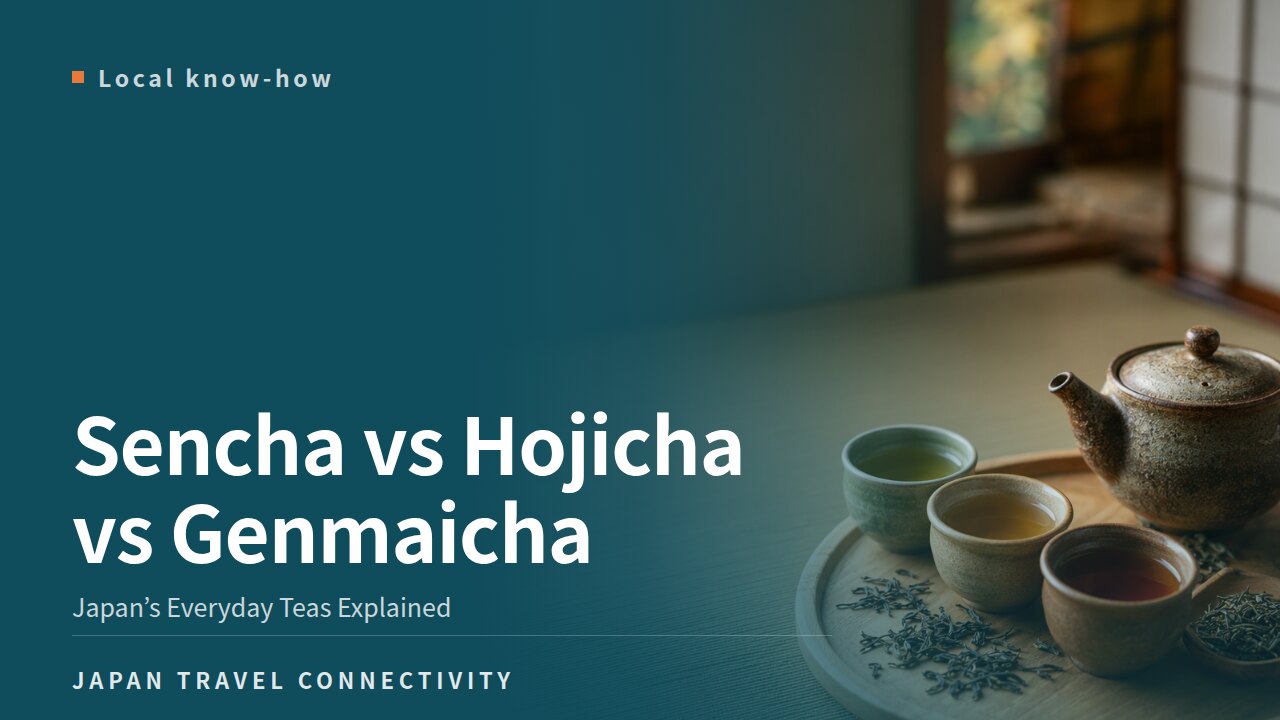
Dinner at a family-run restaurant in Japan ends, and someone puts a cup of tea in front of you without asking. It's almost never matcha. It's usually sencha, or a brown, toasty-smelling hojicha, or genmaicha with little grains of rice floating in it. Those three are Japan's everyday teas, and all three are easy and cheap to take home.
The short version:
- Sencha is Japan's default green tea: fresh and grassy, with a little caffeine.
- Hojicha is roasted, brown and nutty, and easy to drink at any time of day.
- Genmaicha is about half toasted rice, so it's mellow, low in caffeine and a safe gift.
🍵 What do Japanese people actually drink every day?
This section covers what's in the teapot on a normal Tuesday.
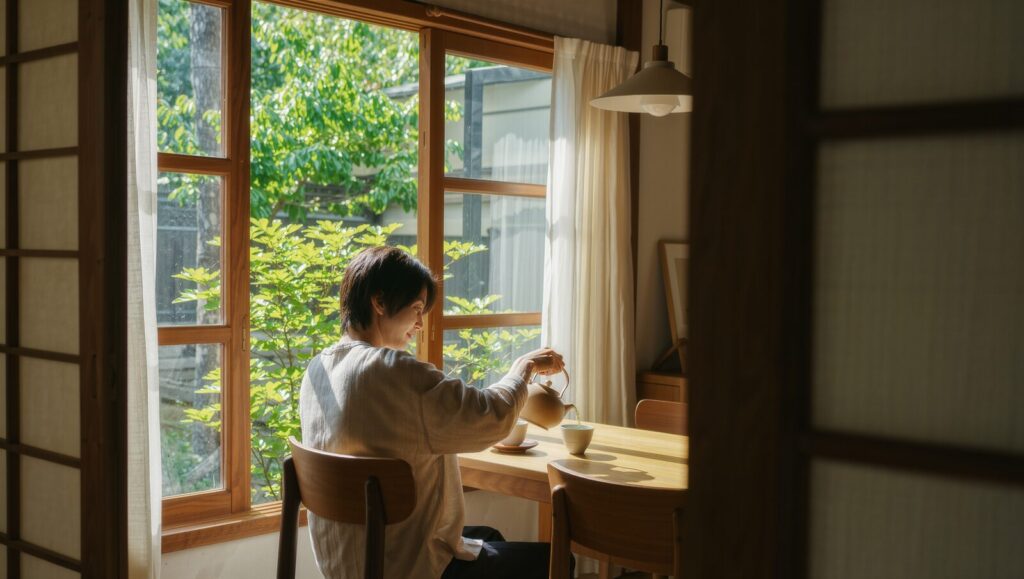
Matcha is the famous one, but daily tea in Japan is made from leaves brewed in a kyusu (急須, a small teapot). JETRO, Japan's trade agency, calls sencha "one of the most widely consumed green teas in Japan."
Each household buys a lot of it. The national average is 647 g of green tea leaves a year, about six and a half 100 g bags. Shizuoka City buys almost double that: 1,215 g a year, averaged over 2023–2025, according to Shizuoka Prefecture's figures from the national household survey.
That isn't a surprise. Shizuoka grows more tea than any other prefecture, with 34.7% of Japan's tea fields in 2025. In Shizuoka, tea is like tap water with a better smell.
Hojicha and genmaicha sit next to sencha as the relaxed options. JETRO describes both as low in caffeine and easy to drink "all day."
🔍 How are sencha, hojicha and genmaicha different?
Here's the quick way to tell them apart in a shop, all in one table.
| Sencha (煎茶) | Hojicha (ほうじ茶) | Genmaicha (玄米茶) | |
|---|---|---|---|
| Looks like | Dark green needles | Brown, roasted leaves | Green leaves with toasted rice |
| Taste | Fresh, grassy, a little bitter | Nutty, toasty, smooth | Mellow, nutty, light |
| Caffeine | Medium | Lower (see below) | Low |
| Price per 100 g, as of 2026-11 | About ¥1,840–¥4,700 at a Uji specialist | About ¥430–¥1,620 | About ¥1,440 |
| Where locals buy | Supermarket for daily use, tea shop or Shizuoka/Uji specialist for good leaves | Supermarket or tea shop | Supermarket or tea shop |
The price ranges come from the online shop of Fukujuen, a long-running Uji tea company, as of 2026-11:
- Sencha: deep-steamed fukamushi sencha costs ¥2,754 for 3 × 50 g. Its "Hachijuhachi" sencha costs ¥2,160 for 50 g, or ¥5,184 for a 110 g can.
- Hojicha: a 200 g everyday bag costs ¥864, and the 100 g "Heian" hojicha costs ¥1,620.
- Genmaicha: a 150 g can costs ¥2,160.
To compare, the average household spends ¥3,187 a year on 647 g of green tea. That works out to roughly ¥490 per 100 g, which is what everyday tea really costs.
My take: for a first bag, buy hojicha. It's the cheapest, it's hard to brew badly, and very little sold back home tastes like it.
☕ Is hojicha really low in caffeine?
Short answer: it's lower in the cup, but the roasting itself takes out less than most people think.
For sencha, the Food Safety Commission of Japan gives 20 mg of caffeine per 100 ml. That's from a lab method using 90°C water for one minute, and it's about a third of the 60 mg they list for coffee.
Hojicha is where the sources disagree. JETRO lists it as low caffeine. But the Japan Tea Central Association tested 38 hojicha samples before and after roasting. On average, roasting cut the caffeine in the leaves by only about 10%, and a few samples ended up with slightly more.
I didn't expect that, and most English guides leave it out. Hojicha does feel lighter. But if you're cutting caffeine for a real reason, don't count on it.
Genmaicha is the easier pick for low caffeine. The Global Japanese Tea Association says it's usually "half rice and half tea." With half the leaves in every spoonful, you get much less caffeine.
🧳 Where do locals buy tea, and where should you?
It depends on what you want to bring home.
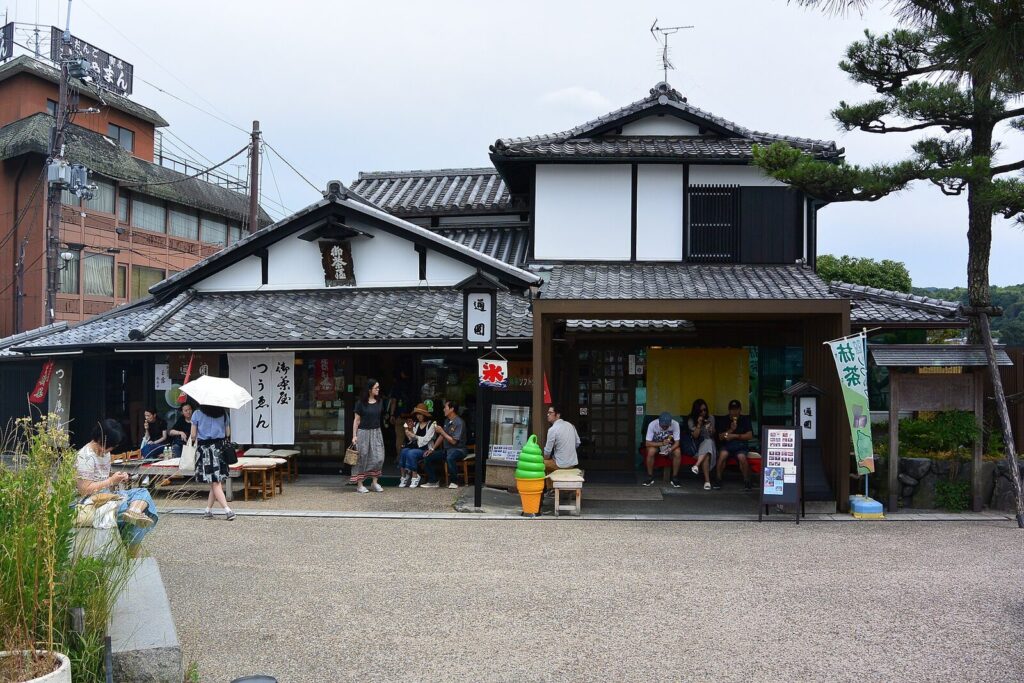
- If it's tea for yourself: go to a supermarket. Every one has a tea aisle with leaf bags and tea bags at everyday prices.
- If it's a gift: go to a tea shop in a department store food hall, or a specialist shop. You'll get a nice can, a gift box and staff who can help.
- If you're visiting Uji: it's about 20 minutes from Kyoto Station on the JR Nara Line rapid train, according to Kyoto's official guide. Long-running tea shops line the street leading to Byodo-in Temple.
- If you love sencha: look for Shizuoka. It's Japan's biggest tea area, and deep-steamed fukamushi sencha is its classic.
One more tip. Many smaller Uji farm shops sell online only to Japanese addresses. The Ujitawara Cha Chokubaijo shop, for example, lists only domestic shipping: a flat ¥780 per package, and free on orders of ¥8,000 or more, as of 2026-11. If a shop like this catches your eye, buy from it in person while you're in Kyoto. You can't easily reorder from home later.
📝 How do I read a Japanese tea label?
You don't need to read Japanese. You only need five words.
- 煎茶 / ほうじ茶 / 玄米茶: sencha, hojicha and genmaicha. Match the characters to the bag.
- 深蒸し (fukamushi): deep-steamed sencha. It's smoother and richer, and it brews a cloudier green.
- 抹茶入り (matcha-iri): matcha added. Look for this on genmaicha bags for a brighter green and a fresher taste.
- 産地 (sanchi), place of origin: 静岡県産 means Shizuoka, and 京都府産 means Kyoto, which covers Uji.
- ティーバッグ (tea bag): handy for hotel rooms and the office. A loose-leaf bag gives you more tea for the money.
Also check the weight (内容量). A 50 g bag of good sencha is about 10 pots of tea at the official lab ratio of 10 g per pot. A 200 g bag of hojicha will last most people a month or more.
❓ FAQ
Can I brew genmaicha with boiling water?
Yes. The Global Japanese Tea Association suggests about 90°C or hotter. It also works as a cold brew in summer.
Which tea makes the best gift?
Genmaicha works well because almost everyone likes it. Its nutty taste surprises people more than plain green tea does, and the GJTA describes it as soft, gentle and not bitter.
Is supermarket tea good enough?
For everyday drinking, yes. That's what most Japanese homes buy. Go to a specialist shop when you want a gift or a particular region's tea.
Is sencha the same as the green tea in bottles?
Most bottled "ocha" is made in the style of sencha. Brewing the leaves yourself gives a fresher, sweeter cup.
🎒 Before you fly: the recap
- Sencha is Japan's everyday green tea: fresh and grassy, at about 20 mg of caffeine per 100 ml.
- Hojicha is roasted and toasty, and the cheapest of the three. Roasting cuts its caffeine by only about 10%.
- Genmaicha is about half rice, so it has the least caffeine. It's the easy gift.
- Japanese households pay roughly ¥490 per 100 g for everyday tea. Specialist sencha in Uji runs higher, as of 2026-11.
- Tea is always better with a little something sweet next to it, so pick a few snacks to pair with it before you fly.
Get the taste of Japan sent home

TokyoTreat — Japan-only snacks, monthly
- In the boxJapan-exclusive snacks, a drink and a snack guide
- Ships toWorldwide
- PlanMonthly, a new theme each time

Sakuraco — traditional sweets and tea
- In the box20 Japanese sweets, a tea pairing and a home-goods item
- Ships toWorldwide
- PlanMonthly, a new theme each time
Show sources
- 緑茶年間支出金額(3年間平均)・年間購入数量(同左)・年間購入数量(単年) 日本一 — Shizuoka Prefecture (accessed 2026-11-05)
- 茶栽培面積、荒茶産出額 日本一 — Shizuoka Prefecture (accessed 2026-11-05)
- About Japanese green tea — JETRO (Japan External Trade Organization) (accessed 2026-11-05)
- Genmaicha (玄米茶) — Global Japanese Tea Association (accessed 2026-11-05)
- 食品中のカフェイン(ファクトシート) — Food Safety Commission of Japan (食品安全委員会) (accessed 2026-11-05)
- 令和6年度農林水産省補助事業 ほうじ茶残留農薬検査事業 実施報告書 — Japan Tea Central Public Interest Incorporated Association (公益社団法人日本茶業中央会) (accessed 2026-11-05)
- 公式オンラインショップ | 宇治茶 福寿園 京都・山城 — Fukujuen (accessed 2026-11-05)
- 宇治茶・お茶の通販・お取り寄せは京都・宇治田原町の「株式会社宇治田原茶直売所」 — Ujitawara Cha Chokubaijo Co., Ltd. (accessed 2026-11-05)
- A Day-Trip Plan in Uji: The Guide to Matcha Sweets, Local Cuisine, and Exploring Byodo-in Temple — Another Kyoto (Kyoto City Official Travel Guide) (accessed 2026-11-05)

Keep reading
Akihabara vs Nakano Broadway vs Ikebukuro: Anime Shopping Guide
Akihabara for figures and cards, Nakano Broadway for retro finds, Ikebukuro for female-oriented fandom. Here's how to pick, plus the new tax…
Shiroi Koibito vs Royce vs LeTAO: Which to Bring Home
Shiroi Koibito, Royce or LeTAO? Compare price, shelf life, heat, and where to buy in Hokkaido or Tokyo, so the right sweet…
Izakaya Etiquette in Japan: Otoshi, Ordering and Paying
At an izakaya, a small starter called otoshi is your cover charge. Here's how to order by tablet, share plates, catch last…