Izakaya Etiquette in Japan: Otoshi, Ordering and Paying
At an izakaya, a small starter called otoshi is your cover charge. Here's how to order by tablet, share plates, catch last order and pay at the register.
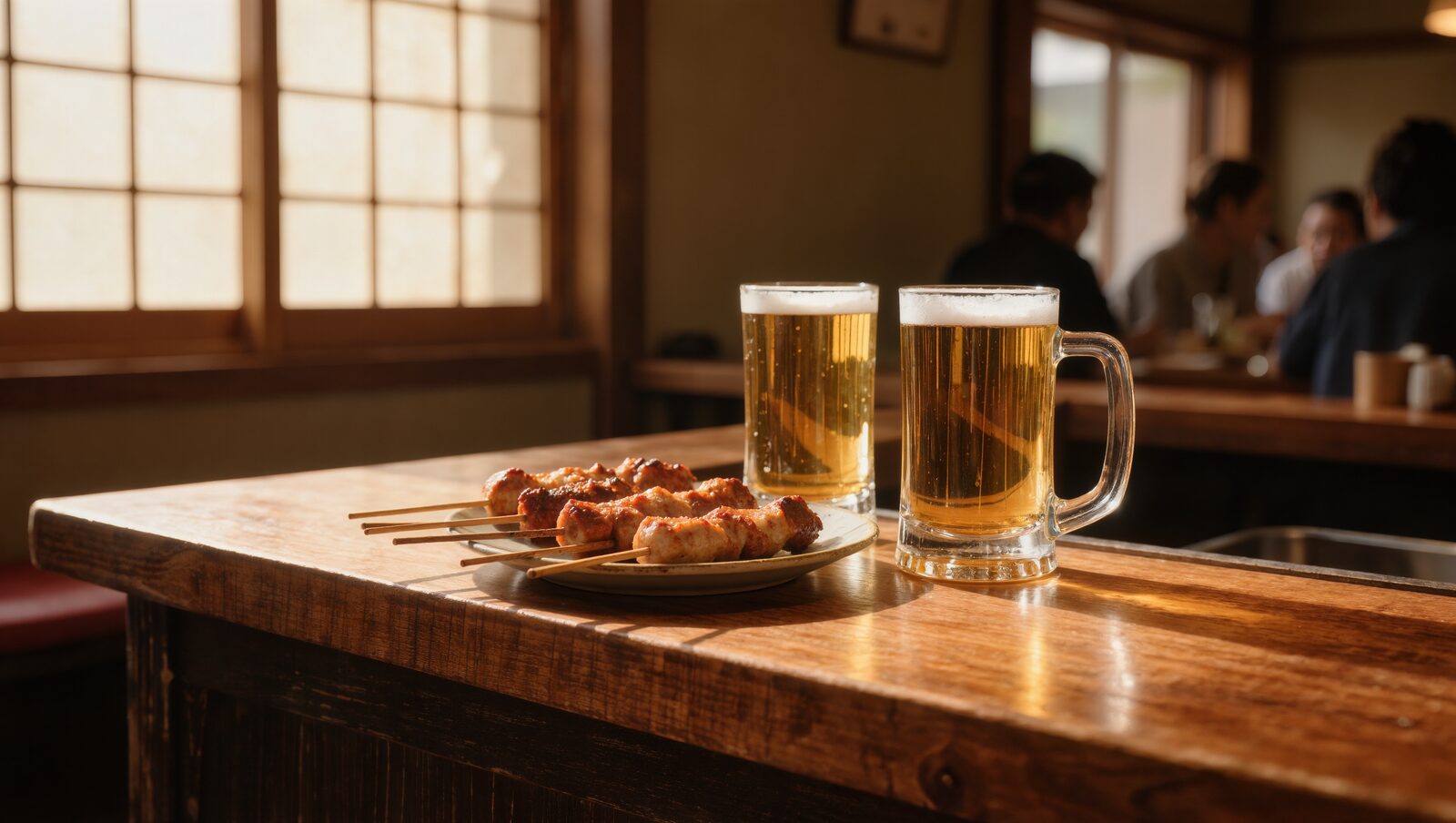
On this page
Disclosure Some links on this page are affiliate links. If you buy through them we may earn a small commission at no extra cost to you. It never changes what we recommend.
This article contains affiliate links. We may earn a commission at no extra cost to you.
You slide the door open, someone shouts "Irasshaimase!", and before you've even looked at a menu, a small bowl of something lands in front of you. You didn't order it. It will be on your bill, and that's completely normal.
That bowl is the otoshi. Once you know about it, and know about the tablet, last order and the register by the door, an izakaya (居酒屋, a Japanese pub that serves food) is one of the easiest and most fun places to eat in Japan.
The short version:
- The small starter you get on arrival is your cover charge. Enjoy it.
- Order a first round of drinks right away, then share lots of small plates.
- Watch for "last order", then pay at the register on your way out. No tip.
🍶 What is otoshi, and do I have to pay for it?
Yes, you'll pay for it. Seeing it on the bill doesn't mean anything has gone wrong.
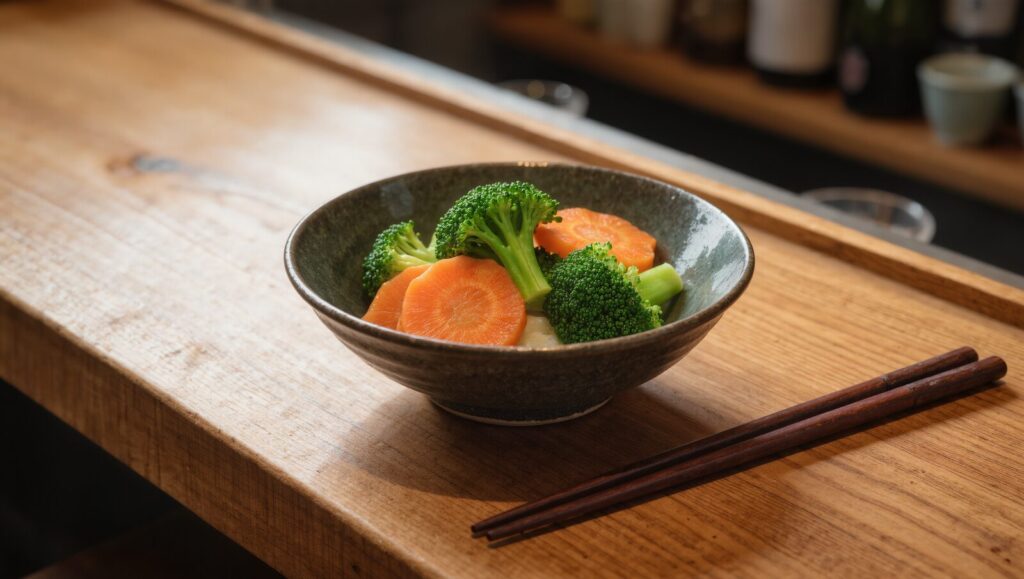
Otoshi (お通し, a small starter served as you sit down) is JNTO's description of "a mandatory appetizer for each guest which serves as a type of cover charge." In western Japan people often call it tsukidashi (突き出し).
What you get changes from place to place. JNTO's drinking guide says it's often "something simple like edamame or pickles or even potato salad, but sometimes it is more elaborate", and you can't swap it for something else.
The local logic is simple. A drink can come out in seconds, but cooked food takes a while. The otoshi gives you something to nibble while you wait, and it also works as the table charge.
One thing people miss: it usually arrives the moment you sit down. JNTO notes that otoshi "tend to come out automatically upon being seated", so mention allergies or dietary needs straight away, before the bowl reaches your table.
If you'd rather skip it entirely, some chains have no cover charge. Torikizoku, the yakitori (grilled chicken skewer) chain, says on its official site that it charges no otoshi fee, no seat fee and no late-night fee: 「お客様からお通し代や席料、深夜料金はいただきません。」 For a first night out, honestly, that's a very relaxed place to start.
🍺 Why does everyone say "toriaezu biru"?
You'll hear this one in almost every group. Toriaezu biru (とりあえずビール) means "beer for now, to start." It's how a table gets its first round moving before anyone has properly read the menu.
You don't have to order beer. Highballs, sours (fruit shochu drinks), oolong tea and soft drinks are all fine. The point is speed: order drinks first, food second.
Then wait. JNTO says plainly that "it is bad manners to drink before everyone has toasted." When every glass has arrived, raise yours and say kanpai (乾杯, cheers).
If you're with Japanese friends, a small gesture goes a long way. JNTO's food etiquette page suggests you "pour for others but don't pour for yourself", and hold your glass slightly tilted when someone pours for you.
📱 How do I order with a tablet or QR code?
If you see a tablet on the table or a QR code on a card, this is good news for you. You can order without speaking any Japanese.
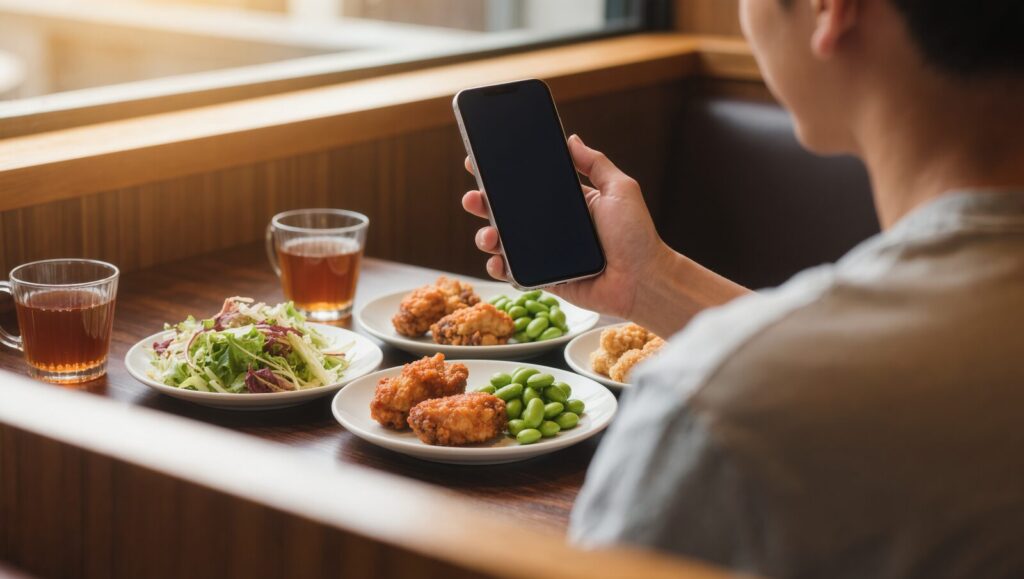
There are three ways you'll usually order:
| How you order | What you'll see | What to do |
|---|---|---|
| Tablet (タッチパネル, touch paneru) | A screen fixed to the table | Tap the language button if there is one, add dishes, tap send |
| QR code (モバイルオーダー, mobile order) | A small card or sticker on the table | Scan with your phone and order in your browser |
| Staff | A paper or picture menu | Call out "Sumimasen!" or press the call button |
More ordering systems now come with menus in other languages. One mobile-order provider, Toreta, added English, Chinese (simplified and traditional) and Korean in September 2025, and guests switch with one click on the ordering screen. If you see a language button, tap it.
Calling out to staff can feel rude to a first-time visitor. It isn't. JNTO says staff are called "with a button or by calling out 'Sumimasen!' (Excuse me!)", and adds that the directness may surprise visitors from North America.
The QR code option is the one that needs your phone online at the table. Without data you'll be scanning a code that won't load.
🍢 How does sharing plates work?
At an izakaya, you don't order one main dish each. JNTO's izakaya guide puts it simply: "Food at an izakaya is meant to be shared."
Order two or three dishes to start, then order again as you go. That's the local rhythm. It keeps the food hot and the evening long.
Each person gets a small plate called a torizara (取り皿, sharing plate). Take food from the big dish, put it on your torizara, then eat. JNTO's etiquette page asks you not to eat straight from the shared platter.
If you can't decide, here's an easy first order for a group of three or four: edamame, karaage (fried chicken), a few yakitori skewers and a salad. Then look around the room and copy what's popular.
⏰ What does "last order" mean?
Around closing time, a staff member will come by and say "rasuto ōdā desu" (ラストオーダーです, it's last order). This is your final chance to order. Nobody is rushing you out.
How early it comes depends on the restaurant, and food and drinks are often different. Take the gyoza izakaya chain Dandadan. Its official opening-hours list (from 6 October 2025) shows dinner last order at most Tokyo branches as one hour before closing for food and 30 minutes before for drinks. On menus and signs you'll see this written as L.O.
So if a place closes at midnight, plan your last plates of food for about 23:00. Check the shop's own page for its hours.
💴 How do I pay, and should I tip?
When you're ready to leave, catch a staff member's eye and say "okaikei onegaishimasu" (お会計お願いします, the bill, please). Crossing your index fingers in a small "x" works too.
In many izakaya you take the bill slip from your table to the reji (レジ, the register near the entrance) and pay there on your way out. In others, staff bring the bill to you. Either way, one person paying and the group sorting it out later is common and quick.
Don't tip. JNTO says it's "not common to tip for services such as those provided in bars, cafes, restaurants, taxis, and hotels."
Cash is still useful, especially at small family-run places. Big chains often take much more. The Torikizoku store page above, for example, lists cash, Visa, Mastercard, JCB, American Express, PayPay, Alipay and WeChat Pay, among others. If you're heading for a tiny counter bar, carry some cash.
❓ FAQ
Can I refuse the otoshi?
Some places let you, most don't. It's the cover charge, not an optional dish. If you have allergies, tell staff as soon as you sit down. If you'd rather pay no cover charge at all, choose a chain that says it doesn't charge one, such as Torikizoku.
Is it OK to go to an izakaya alone?
Yes. Counter seats are made for it, and a tablet makes ordering easy.
Do I need to speak Japanese?
No. "Sumimasen", "kanpai" and "okaikei onegaishimasu" will get you through the night. A translation app on your phone covers the rest, including handwritten specials boards.
Is there a late-night charge?
At some places, yes. JNTO notes some izakaya add "an additional surcharge for late-night customers." The menu or the shop's site will mention it.
Can kids or non-drinkers go?
Yes. Soft drinks and oolong tea are standard, and many chain izakaya are family-friendly in the early evening.
🧳 Your izakaya recap
- The otoshi is your cover charge. It arrives on its own, so mention allergies early.
- Order drinks first (toriaezu biru if you like), wait for kanpai, then share small plates.
- Listen for "last order". Food often stops before drinks.
- Pay at the reji on the way out, and don't tip.
- A lot of this happens on your phone (QR menus, the translation app for the specials board, paying with a payment app), so set up your data plan before you fly. That way your phone works the moment you sit down.
Get your data sorted before you land

Ubigi — 10 GB / 30 days
- Data10 GB
- Valid30 days
- NetworkNTT docomo / KDDI / SoftBank · 5G
- HotspotYes

Airalo Moshi Moshi — 10 GB / 30 days
- Data10 GB
- Valid30 days
- NetworkSoftBank / KDDI (au) / Rakuten · 5G
Show sources
- Etiquette — Japan National Tourism Organization (JNTO) (accessed 2026-11-03)
- Drinking the Japanese Way — Japan National Tourism Organization (JNTO) (accessed 2026-11-03)
- Izakaya Dining Guide — Japan National Tourism Organization (JNTO) (accessed 2026-11-03)
- Japanese Food Etiquette Guide — Japan National Tourism Organization (JNTO) (accessed 2026-11-03)
- Tipping in Japan — Japan National Tourism Organization (JNTO) (accessed 2026-11-03)
- Table Manners in Japan — Japan National Tourism Organization (JNTO) (accessed 2026-11-03)
- 鳥貴族のこだわり — Torikizoku (Eternal Hospitality Japan) (accessed 2026-11-03)
- [Official] Torikizoku Sendai Izumichuo Store — Torikizoku (Eternal Hospitality Japan) (accessed 2026-11-03)
- 【肉汁餃子のダンダダン】営業時間一覧(2025年10月6日〜) — Nikujiru Gyoza no Dandadan (accessed 2026-11-03)
- トレタO/X(モバイルオーダー)が多言語対応機能をリリース — Toreta, Inc. (accessed 2026-11-03)

Keep reading
Akihabara vs Nakano Broadway vs Ikebukuro: Anime Shopping Guide
Akihabara for figures and cards, Nakano Broadway for retro finds, Ikebukuro for female-oriented fandom. Here's how to pick, plus the new tax…
Sencha vs Hojicha vs Genmaicha: Japan’s Everyday Teas Explained
Sencha, hojicha or genmaicha? What Japanese people really drink at home, how much caffeine each one has, what 100 g costs and…
Shiroi Koibito vs Royce vs LeTAO: Which to Bring Home
Shiroi Koibito, Royce or LeTAO? Compare price, shelf life, heat, and where to buy in Hokkaido or Tokyo, so the right sweet…