Depachika Guide: Japan’s Food Halls, Discount Hour and Tax-Free
Depachika are the food floors under Japan's department stores. Here's what to buy, when prices drop, Tokyo and Osaka picks, and the new tax-free rules.
On this page
Disclosure Some links on this page are affiliate links. If you buy through them we may earn a small commission at no extra cost to you. It never changes what we recommend.
This article contains affiliate links. We may earn a commission at no extra cost to you.
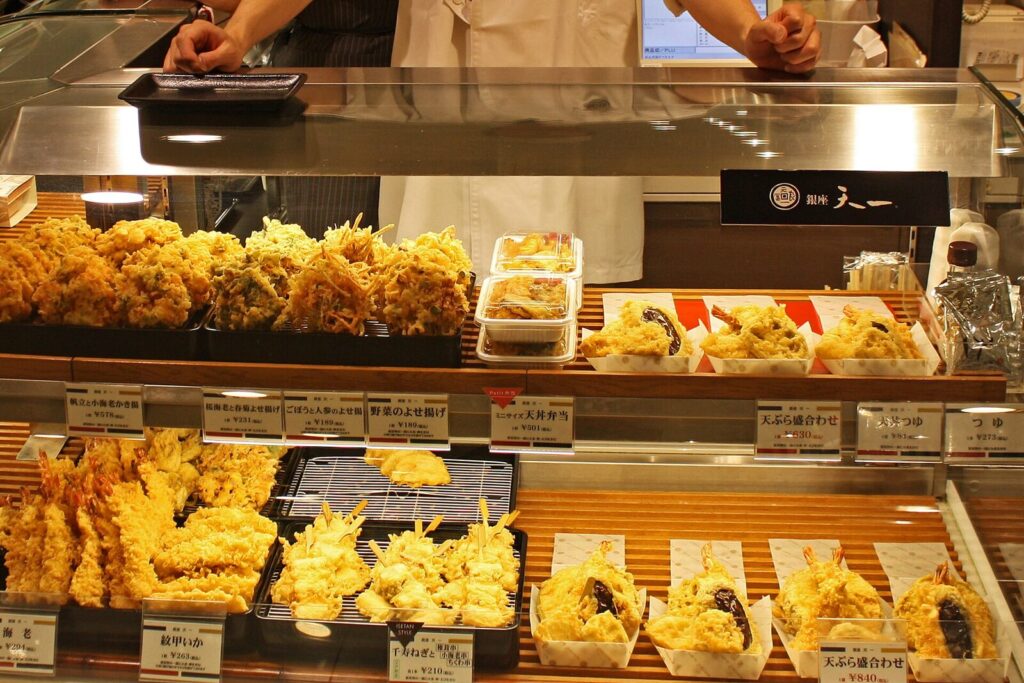
It's 18:45 at Tokyo Station. You're tired, the hotel is ten minutes away, and you don't want to queue for a restaurant. Go downstairs. The food floor under the department store sells sushi, bento boxes and cakes good enough to bring as a gift, and in the last hour before closing a lot of it gets cheaper.
The short version:
- Depachika (デパ地下) means the food floors in a department store basement: ready-made dinners, gift sweets, and fresh food under one roof.
- Go around 19:00 for dinner deals. Go before lunch for the best choice of sweets.
- From 1 November 2026, tax-free shopping becomes a refund you claim at the airport, so keep food for home separate from food you eat on the trip.
🍱 What is a depachika, and why do locals love it?
In short, it's a supermarket, a bakery street and a gift shop rolled into one floor.
The word joins depāto (デパート, department store) and chika (地下, basement). Hankyu Umeda in Osaka shows the usual layout well. B1 has Japanese and Western sweets, bread, prepared dishes and bento. B2 has fish, meat, vegetables, fruit, pickles, sake and wine.
Locals use it for three things:
- Gifts. Boxed sweets from a department store are the safe choice when you visit someone's home or bring back omiyage (お土産, souvenirs you buy for friends and coworkers). Hankyu's B1 even has an information counter with a food-gift advice service.
- Dinner on a busy night. You buy two or three side dishes (sōzai, 惣菜) and a rice box, then eat at home.
- Little treats. One perfect pudding, a slice of cake, a seasonal wagashi (和菓子, Japanese sweets).
Most guides miss this part: a depachika isn't a food court. It's built for taking food home. Keep that in mind and the whole place makes sense.
⏰ When should you go?
That depends on what you want: the best choice or the best price.
| If you want… | Go around | Why |
|---|---|---|
| Popular sweets and gift boxes | 10:00–12:00 | The doors open at 10:00 and everything is in stock |
| A cheap, good dinner | 19:00–20:00 | Prepared food is marked down before closing |
| A calm look around | Weekday early afternoon | Fewer office workers |
The stores below keep the same hours. As of 2026-10, Daimaru Tokyo's B1–11F, Daimaru Umeda and Hankyu Umeda are all open 10:00–20:00.
So when does the discount start? In an article for GOLD ONLINE, Professor Kadota Kyoyu of Aichi Medical University notes that if you visit a department store's prepared-food section at 19:00 on a Sunday, many items are 30% off. His reason is simple: shops would rather sell cheaply than throw food away. Prepared food doesn't keep until the next day.
Look for these stickers:
- 割引 (waribiki): a percentage off. 2割引 means 20% off, 3割引 means 30% off
- 円引き (en-biki): yen off. 100円引き means 100 yen off
- 半額 (hangaku): half price
My advice: go at 19:00, not 19:50. Sushi and tempura are popular enough that the best trays are often gone before the biggest markdowns. A 20–30% saving on food you actually want is better than half price on what's left.
🗼 Which depachika should you visit in Tokyo and Osaka?
If you only have time for one, pick the one on your route. All of them are good enough that a special trip isn't needed.
| Store | Where | Food floors | Who it suits |
|---|---|---|---|
| Daimaru Tokyo | Connected to Tokyo Station | B1 and 1F (called "Hoppe Town") | Shinkansen riders who want a bento for the train |
| Hankyu Umeda | Umeda, Osaka | B1 sweets, bento and deli; B2 fresh food and world foods | Sweet lovers and gift shoppers |
| Daimaru Umeda | Osaka Station | B1: deli, bento and sushi on the east side; sweets and tea on the west side | A quick dinner before going back to your hotel |
Daimaru Tokyo has direct entrances to Tokyo Station on B1 and 1F. That makes it the easy choice before an early-evening Shinkansen. It ran its autumn Hoppe Town festival until 12 October 2026, and during the festival B1 bento cost from 1,000 yen up to 2,160 yen (tax included). That's a lot more interesting than a station kiosk for about the price of a casual lunch.
Hankyu Umeda is the one I'd go out of my way for. Both food floors are large, and B1 has a counter for overseas customers that handles tax-free paperwork, plus a service counter that arranges delivery and holds your purchases so you can collect them together. B2 has a refrigerated coin locker, which is a smart extra if you want to keep shopping upstairs.
Daimaru Umeda is being renovated, and as of 2026-10 its floor guide lists B1 as the only open food floor. It's still a tidy, easy floor: savoury on one side, sweet on the other.
🛍 How do you shop as a visitor: tax-free and eating rules?
Here's the short version: food you eat in Japan is never tax-free, and the way you claim tax-free on everything else changes on 1 November 2026.
Until 31 October 2026, the current system applies.
From 1 November 2026, Japan switches to what the Japan Tourism Agency calls the Refund Method:
- You pay the full price, including tax, at the shop and show your passport
- You need 5,000 yen or more (before tax) at one store on one day
- Within 90 days of buying, you show your passport at a tax-free kiosk at the airport or seaport, and customs confirms the goods are leaving Japan
- Sealed bags for food go away, but if you eat or drink the items in Japan, they don't qualify
JNTO adds that you do this at customs before you check in for your flight. Leave about 15 extra minutes at the airport.
Honestly, the new rules suit gift boxes better than dinner. A box of sweets for your office back home can count toward the 5,000 yen. Tonight's sushi can't. Pay for them separately so your refund paperwork stays clean.
Eating rules. Most depachika have no seating, because the food is meant to go home. Take your bag back to the hotel, or find a café upstairs. Daimaru Tokyo, for example, has cafés on the 7th and 9th floors. Eating while you walk through the food floor isn't normal here, so wait until you sit down.
🍬 What sweets are worth buying, and how do you get them home?
Gift sweets are packed to travel. Fresh cakes aren't.
- Boxed baked sweets and senbei (rice crackers): they keep for weeks, survive a suitcase, and are what locals bring as omiyage
- Seasonal wagashi: beautiful but often good for only a day or two. Eat them in Japan
- Puddings and cream cakes: eat them tonight
This is the part people miss: the sweets you'll miss most after the trip are often the everyday ones, not the fancy boxes. Sending a few home after you fly back is now an easy option, and you skip the suitcase space and the airport kiosk.
❓ FAQ
What does depachika mean?
It's short for depāto chika, the basement food floors of a Japanese department store.
What time do depachika discounts start?
Usually around 19:00 at stores that close at 20:00. The exact time differs by shop and by day.
Can I get tax-free on food at a depachika?
Yes, for food you take out of Japan, as long as you spend 5,000 yen or more (before tax) at one store on one day. From 1 November 2026 you pay the tax first and claim it back at the airport.
Is depachika food expensive?
It covers a wide range. As of 2026-10, Daimaru Tokyo's B1 had bento from 1,000 yen, which is about the price of a casual lunch.
Can I eat inside the depachika?
Usually not. Take it to your hotel or a café upstairs.
🧳 Quick recap
- A depachika is the department store basement food floor, made for gifts and take-home dinners.
- Go in the morning for the best sweets, and at 19:00 for dinner markdowns.
- Daimaru Tokyo suits train days. Hankyu Umeda is the one for sweets and gifts.
- From 1 November 2026, tax-free means paying first and claiming at the airport within 90 days. Food you eat in Japan doesn't count.
- Before you fly, decide which Japanese sweets you want waiting at home, so the suitcase can stay for everything else.
Get the taste of Japan sent home

TokyoTreat — Japan-only snacks, monthly
- In the boxJapan-exclusive snacks, a drink and a snack guide
- Ships toWorldwide
- PlanMonthly, a new theme each time

Sakuraco — traditional sweets and tea
- In the box20 Japanese sweets, a tea pairing and a home-goods item
- Ships toWorldwide
- PlanMonthly, a new theme each time
Show sources
- 阪急うめだ本店 フロアガイド — Hankyu Department Store (accessed 2026-10-14)
- 阪急うめだ本店 — Hankyu Department Store (accessed 2026-10-14)
- 大丸梅田店 フロアガイド — Daimaru Matsuzakaya Department Stores (accessed 2026-10-14)
- 大丸梅田店 営業時間 — Daimaru Matsuzakaya Department Stores (accessed 2026-10-14)
- 大丸東京店 フロアガイド — Daimaru Matsuzakaya Department Stores (accessed 2026-10-14)
- 大丸東京店 営業時間 — Daimaru Matsuzakaya Department Stores (accessed 2026-10-14)
- ほっぺタウン祭|大丸東京店 — Daimaru Matsuzakaya Department Stores (accessed 2026-10-14)
- 1. What is the Refund Method? — Japan Tourism Agency (accessed 2026-10-14)
- Changes are Coming to Japan’s Tax-Free Shopping! — Japan National Tourism Organization (JNTO) (accessed 2026-10-14)
- デパ地下の惣菜コーナー「こんなに割引して大丈夫?」の真相 — GOLD ONLINE (Gentosha) (accessed 2026-10-14)

Keep reading
Akihabara vs Nakano Broadway vs Ikebukuro: Anime Shopping Guide
Akihabara for figures and cards, Nakano Broadway for retro finds, Ikebukuro for female-oriented fandom. Here's how to pick, plus the new tax…
Sencha vs Hojicha vs Genmaicha: Japan’s Everyday Teas Explained
Sencha, hojicha or genmaicha? What Japanese people really drink at home, how much caffeine each one has, what 100 g costs and…
Shiroi Koibito vs Royce vs LeTAO: Which to Bring Home
Shiroi Koibito, Royce or LeTAO? Compare price, shelf life, heat, and where to buy in Hokkaido or Tokyo, so the right sweet…