How to Call a Japanese Restaurant With a Data-Only eSIM
A data-only eSIM can’t dial a Japanese landline. Here are the reservation routes that still work in 2026, what they cost, and how to dial +81.
On this page
- Why can't my data-only eSIM call a restaurant?
- What no longer works: Skype Credit and LINE Out
- Options that work in 2026, compared
- Option 1: book online and skip the phone entirely
- Option 2: give yourself a Japanese 050 number over data
- Option 3: travel with a real Japanese phone number
- Option 4: the hotel front desk
- Option 5: your own number over Wi-Fi or roaming
- How do you dial a Japanese number correctly?
- What to say when you call
- Which option should you pick?
- Frequently asked questions
- Sources
Disclosure Some links on this page are affiliate links. If you buy through them we may earn a small commission at no extra cost to you. It never changes what we recommend.
Short answer: a data-only eSIM cannot dial a Japanese landline, so you need a different route to the phone. The three that work today are an online reservation platform, a VoIP number that runs over your data connection, or a travel SIM that comes with a real Japanese phone number. Two options that older guides still recommend — Skype Credit and LINE Out — are no longer available to new users.
This matters more in Japan than in most countries. Small restaurants, izakaya and ramen counters often take bookings by phone only, and the hotel concierge route has a queue of its own at peak season.
Why can’t my data-only eSIM call a restaurant?
A data-only eSIM gives you an internet connection and nothing else. There is no voice channel and no phone number attached to the line, so the dialler on your phone has nothing to dial out through.
You will usually see one of two symptoms: the call fails immediately, or your phone quietly falls back to your home SIM and places an international roaming call at your home carrier’s rates. The second is worse, because you only find out when the bill arrives.
Everything below is about giving your phone a voice path again — either through an app that carries the call over your data, or through a line that actually has a number.
What no longer works: Skype Credit and LINE Out
A lot of travel advice still says to top up Skype Credit and dial the restaurant. That route is closed to newcomers. Microsoft’s support page states that Skype is retired as of 5 May 2025, and that new purchases for Skype Subscriptions, Skype Numbers and Skype Credit are no longer available. The Dial Pad survives inside Teams Free and the Skype web portal, but Microsoft describes it as being for existing paid users spending down remaining credit — not something you can sign up for before your trip.
LINE Out is a longer-dead end. LINE’s own store notice says the service ended on 31 May 2023, because LINE Plus would no longer be operating as a phone service provider in Japan, and that any call credit previously purchased was refunded. LINE suggests its free voice and video calls between LINE friends as the alternative — which is fine for your travel companions and useless for calling a restaurant that is not on LINE.
If a guide published recently tells you to use either of these, treat the rest of that guide with caution.
Options that work in 2026, compared
| Method | What it costs | Can the restaurant call you back? | Japanese needed? |
|---|---|---|---|
| Online reservation platform (TableCheck and similar) | No call needed | Not usually — confirmation by email | No, English interfaces exist |
| VoIP app with a Japanese 050 number (Brastel My 050) | Setup fees plus per-call rates; see below | Yes — the 050 number receives calls | Usually yes |
| Travel SIM or eSIM with a Japanese number (Mobal and similar) | Monthly fee plus per-minute calls; see below | Yes — a real 070/080/090 number | Usually yes |
| Hotel concierge or front desk | Free to guests | Yes — they take the callback | No |
| Your home SIM roaming | Your carrier’s international rates | Yes, at roaming rates | Usually yes |
| Wi-Fi Calling on your home number | Depends entirely on your carrier | Yes, if your carrier allows it abroad | Usually yes |
Option 1: book online and skip the phone entirely
For anything mid-range and upward, this is the path of least resistance. TableCheck is a Japan-based reservation platform with an English interface where you can find and book restaurants directly, without a phone call and without a Japanese number to dial from.
The limitation is coverage. Family-run places, counters with eight seats, and neighbourhood izakaya frequently have no online booking at all. That is exactly where the phone problem bites, which is why the other options still matter.
Two practical habits help. Check the restaurant’s own website or its Google listing for a booking link before assuming you have to call, and book as far ahead as the platform allows for anything popular.
Option 2: give yourself a Japanese 050 number over data
A VoIP number rides on the data connection your eSIM already provides. Brastel’s My 050 is a long-running Japanese example: the app assigns you a 050 IP telephone number, described by Brastel as your own number in Japan, and lets you place and receive calls anywhere in the world over an internet connection.
Brastel lists a one-time application fee of 550 yen including tax, plus a maintenance fee of 550 yen including tax charged every six months (prices as shown on Brastel’s My 050 page, checked September 2026). Per-minute calling rates are published separately on Brastel’s rates page and change over time, so check them before you rely on a figure from any article, including this one.
Two things to understand about a 050 number. It is a genuine Japanese number, so a restaurant can call you back on it — a real advantage when they need to confirm. But because calls travel over data, call quality depends on your connection at that moment, and a crowded station concourse is not the place to attempt a reservation in a second language.
Option 3: travel with a real Japanese phone number
If you expect to make several calls, a voice-capable SIM or eSIM removes the problem at the source. Mobal is one provider whose eSIM includes a real 070, 080 or 090 Japanese phone number.
On Mobal’s Japan eSIM page, the plan is listed at 1,430 yen per month, with incoming calls free, outgoing domestic calls at 44 yen per minute and domestic texts at 33 yen per message; the page also states that there are no activation fees and no termination fees, and that the first calendar month is pro-rated from your activation date (all figures as displayed on Mobal’s page, checked September 2026). Prices change, so confirm on the provider’s own page before you buy.
Compare that honestly against your actual need. If you will make two phone calls on a ten-day trip, a monthly voice plan is an expensive way to make two phone calls. If you are travelling for work, chasing several reservations, or need a Japanese number for deliveries and bookings, it is the cleanest answer.
Option 4: the hotel front desk
Underrated and free. Hotel staff call in native Japanese, understand what the restaurant is actually asking, and can give the restaurant the hotel’s number for the callback. For a small counter restaurant that has never taken a booking in English, this is often the only route that ends in a confirmed table.
Give the desk the restaurant name in Japanese if you can, plus your preferred date, time, party size and any dietary requirement. Ask them to note the reservation name they used, since it may be the hotel’s name rather than yours.
Option 5: your own number over Wi-Fi or roaming
If you kept your home SIM active alongside the travel eSIM, Wi-Fi Calling may let you dial from your usual number over the hotel’s internet. Apple describes Wi-Fi Calling as a way to make or receive a voice call when you have a Wi-Fi connection in an area with little or no cellular coverage, and is explicit that your carrier must offer the feature.
The catch is that carrier policies on using Wi-Fi Calling from abroad vary widely, and the call will usually be billed as an international call from your home country to Japan. Check with your carrier before you travel rather than discovering the rate afterwards.
Straight roaming works too, at your carrier’s international rates, which are usually the most expensive option on this page.
How do you dial a Japanese number correctly?
Getting the format wrong is a common reason calls fail. NTT docomo’s guidance for dialling Japanese numbers from outside Japan is to enter the plus sign, then 81 for the Japan country code, then the number with the leading 0 omitted.
- A Tokyo landline written as 03-1234-5678 becomes +81 3 1234 5678.
- A mobile written as 090-1234-5678 becomes +81 90 1234 5678.
- To type the plus sign on a phone keypad, press and hold the 0 key for about a second.
If you are calling from a Japanese line inside Japan, dial the number exactly as written, leading 0 included. The 0 is only dropped when the call crosses the border.
One more thing worth knowing: 050 numbers are IP phone numbers rather than area-code landlines, and 070, 080 and 090 are mobile prefixes. A restaurant seeing a 050 number knows it is a VoIP line, which is unremarkable in Japan.
What to say when you call
Keep it short and structured. Japanese restaurant staff answering a lunchtime phone are not expecting a conversation, and a clear four-item request is easier for both sides than an apologetic ramble.
Lead with the essentials in this order: date, time, number of people, name. A workable opening:
- Yoyaku onegaishimasu. (予約お願いします — I would like to make a reservation.)
- Kugatsu nijuu-yokka, gogo shichi-ji, futari desu. (9月24日、午後7時、2人です — 24 September, 7pm, two people.)
- Namae wa …… desu. (名前は……です — My name is ……)
- Eigo wa daijoubu desu ka? (英語は大丈夫ですか — Is English okay?)
Have the answers to the likely follow-ups written down before you dial: your phone number, whether anyone in your group has an allergy (arerugii), and whether you want a counter or a table. If the call goes sideways, sumimasen, mata denwa shimasu (すみません、また電話します — sorry, I will call again) is a graceful exit.
Write the restaurant’s name and address in Japanese into your notes app before you call. If the call succeeds, you will want them for the taxi anyway.
Which option should you pick?
For most travellers on a data-only eSIM, the sensible order is: try to book online first, use the hotel front desk for anything that needs a Japanese-language call, and add a 050 VoIP number only if you expect to make calls regularly or need to be reachable. A full voice SIM or eSIM makes sense for longer trips, business travel, or anyone who wants a Japanese number for other reasons.
Whichever you choose, set it up before you land. An app that needs an SMS code or a payment verification is much easier to sort out at home than in a queue outside a restaurant that stops taking bookings in ten minutes.
Frequently asked questions
Can I make phone calls with a data-only eSIM?
Not through the normal dialler, because the line has no voice service and no number. You can make calls through apps that carry voice over your data connection, such as a VoIP service with a Japanese 050 number, or through Wi-Fi Calling on a separate line if your home carrier supports it.
Can I still use Skype Credit to call Japan?
Not as a new user. Microsoft’s support page says Skype was retired on 5 May 2025 and that new purchases of Skype Subscriptions, Skype Numbers and Skype Credit are no longer available; the Dial Pad remains for existing paid users with credit or an active subscription.
What about LINE Out?
LINE Out ended on 31 May 2023 according to LINE’s official notice, and remaining call credit was refunded. LINE’s free calls still work, but only between LINE users — they cannot reach a restaurant’s landline.
Do I need a Japanese phone number to book a restaurant?
Often, yes, for phone bookings and for some online systems that ask for a contactable number. A hotel will usually let you give the front desk number, and a 050 VoIP number or a travel SIM with a Japanese number both solve it properly.
Will the restaurant call me back?
Sometimes, especially to confirm a change or a cancellation. That is the strongest argument for a number that can actually receive calls rather than an outbound-only workaround.
How do I dial a Tokyo 03 number from my phone?
From outside Japan, or from a foreign line, enter +81, drop the leading 0, then the rest: 03-1234-5678 becomes +81 3 1234 5678. From a Japanese line inside Japan, dial it exactly as printed.
Sources
- Skype is retiring in May 2025: What you need to know — Microsoft Support (accessed 2026-09-14)
- End of LINE Out service — LINE STORE (accessed 2026-09-14)
- Make international calls with Google Voice — Google Voice Help (accessed 2026-09-14)
- How to Make and Receive Calls when Roaming — NTT DOCOMO (accessed 2026-09-14)
- My 050 — softphone app and 050 number — Brastel Telecom (accessed 2026-09-14)
- eSIM Japan: eSIM with a Japanese phone number — Mobal (accessed 2026-09-14)
- Reservations at Japan’s restaurants — TableCheck (accessed 2026-09-14)
- Make a call with Wi‑Fi Calling — Apple Support (accessed 2026-09-14)

Keep reading
Do You Need LINE in Japan? Registering From Abroad Explained
Do tourists need LINE in Japan? What it is used for, how to register from abroad without a Japanese number, and the…
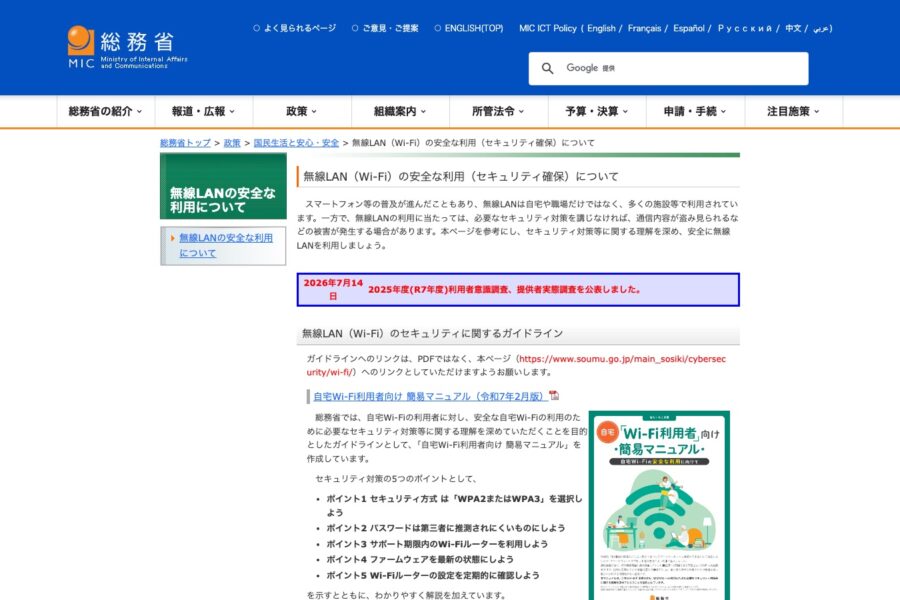
Is Free WiFi in Japan Safe? Captive Portals, VPNs and Risks
Most free WiFi in Japan is open and unencrypted. Here's the real risk in 2026, what each network collects, and when a…
Tokyo Disney vs USJ: Park Apps, Free WiFi and Data
Tokyo Disney's free WiFi covers the entrance only, 15 minutes at a time. USJ went park-wide. Here's what to install and how…