Typhoon Season in Japan: Cancelled Trains, Flights and What to Do
How Japan's alert levels work, what a railway planned suspension actually means, how airlines handle weather cancellations, and the morning routine that keeps a trip moving during typhoon season.
On this page
- The five-level alert scale, in plain terms
- What a planned suspension actually is
- Flights: what the published policies say
- Where travel insurance usually sits
- The morning routine
- Reading the forecast like a local
- Season and region at a glance
- Rethinking the itinerary rather than cancelling it
- If you are already moving when it hits
- Frequently asked questions
- Summary
- Sources
Disclosure Some links on this page are affiliate links. If you buy through them we may earn a small commission at no extra cost to you. It never changes what we recommend.
This article contains affiliate links. We may earn a commission at no extra cost to you.
The short answer: Japan does not improvise during a typhoon. Railways announce planned suspensions in advance, the government uses a numbered five-level alert scale, and airlines publish their weather rebooking rules. The skill you need is not bravery — it is knowing which number to look at each morning and when to stop moving.
Typhoons reach Japan mainly between roughly July and October, with the heaviest activity in the late-summer and early-autumn window. A typhoon that affects your trip rarely does so by trapping you somewhere dramatic. It does so by cancelling the shinkansen you booked three months ago, on a day when the sky over your hotel looks merely grey.
Everything below is drawn from official sources checked on October 24, 2026: the Japan Meteorological Agency, the Cabinet Office, ANA's published weather policy and JNTO. The specifics of any given storm change hourly; the framework does not.
The five-level alert scale, in plain terms
Japan uses a numbered alert scale that runs from 1 to 5, and the number is what matters — not the wording, which varies between agencies and translations.
The Cabinet Office publishes the evacuation-information version of the scale, which tells residents what to do at each level:
| Level | Information issued | What it means for you |
|---|---|---|
| 5 | Emergency Safety Measure | Life-threatening situation; take immediate action to protect your life |
| 4 | Evacuation Instruction | Everyone must evacuate from dangerous areas |
| 3 | Evacuation of the Elderly, etc. | Those needing more time must evacuate; others prepare |
| 2 | Warning for storm surge, flood or sediment disaster | Check evacuation routes and prepare |
| 1 | Early Warning | A disaster is possible; keep up with the latest information |
Source: Cabinet Office, Evacuation Information (Revised Version)
The Japan Meteorological Agency maps its own products onto the same numbers. For heavy rain, flood, landslide and storm surge, JMA states that Emergency Warnings correspond to Level 5, Urgent Warnings to Level 4, Warnings to Level 3 and Advisories to Level 2. (JMA Emergency Warning System)
That mapping is the single most useful thing to memorise. When a hotel staff member or a station board mentions a "warning" rather than an "advisory," you now know roughly where on the scale you are standing.
JMA is explicit about what an Emergency Warning signifies: it is issued when phenomena "are expected to be of a scale that will far exceed the warning criteria," and the issuance "indicates a level of exceptional risk of a magnitude observed only once every few decades." The system launched on 30 August 2013. These are not routine notices.
Equally important is JMA's caution in the other direction. Warnings and Advisories continue to be issued in their normal form alongside the Emergency Warning system, and the agency states that "residents should not let down their guard even if no Emergency Warning is currently in effect in the area." Most trip disruption happens well below Level 5.
What a planned suspension actually is
The Japanese railway practice that surprises visitors most is the planned suspension: an announcement, made in advance, that services on specified lines will stop at a specified time, regardless of what the weather is doing at that exact moment.
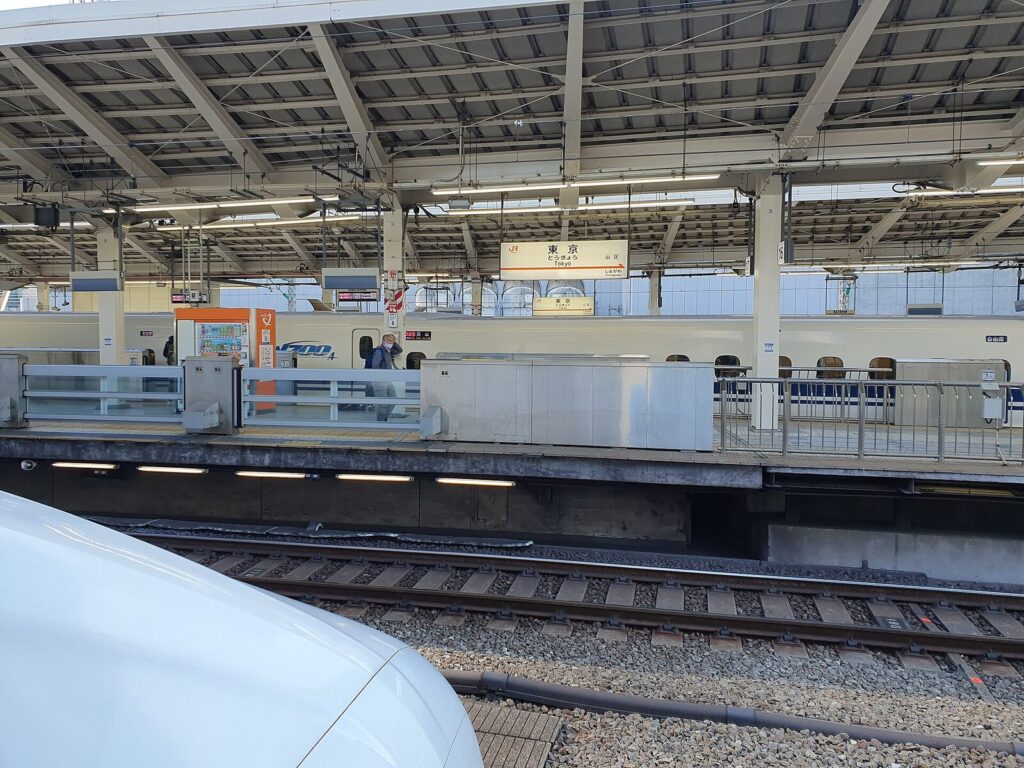
This is a deliberate safety and recovery measure rather than a reaction to conditions. Stopping on a schedule means trains and crews end up where they are supposed to be, rather than stranded mid-route, which in turn means services can restart faster once the storm passes.
For a traveller, three consequences follow:
- The announcement arrives before the bad weather. You will often see a suspension notice on a day that still looks fine. That is the system working, not an overreaction.
- The suspension has a stated start time. Trains before that time generally run; trains after it do not. Your decision is whether to move earlier, not whether to risk it later.
- Restarting is gradual. Services resume line by line after inspection. The first trains after a suspension are crowded, and reserved seats on them sell out quickly.
| What you see | What it means | Your move |
|---|---|---|
| Suspension announced for tomorrow afternoon | Trains stop at the stated time | Travel in the morning or stay put |
| Suspension already in effect | No service on that line now | Do not go to the station; check online |
| "Services resuming sequentially" | Partial restart underway | Expect crowds and queues for reservations |
| Reduced timetable announced | Fewer trains, not zero | Build extra time into connections |
A practical point on shinkansen reservations: if your reserved train is cancelled, the reservation does not simply transfer itself to a later train. You need to go through the refund or change process, and the queues at ticket offices after a suspension are long. Doing it online or via an app, where your ticket type allows, saves hours.
Flights: what the published policies say
Airlines publish their weather policies, and they are worth reading before you need them because the detail is specific.
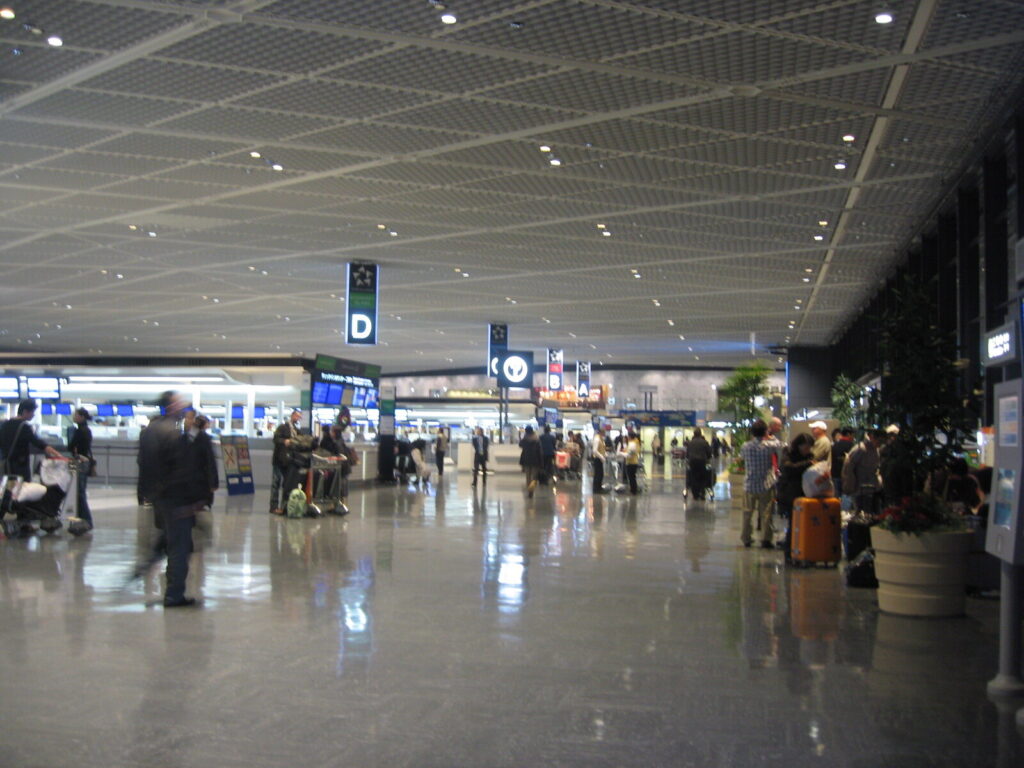
ANA's page on domestic flights affected by inclement weather states that customers can transfer to another ANA flight, and that the procedure "must be completed at least 20 minutes prior to the departure of the reserved flight." It also notes that changes cannot be made on the ANA website less than 20 minutes before departure. (ANA: refunds and changes due to weather)
Two further points from the same page are easy to miss:
- Incidental costs are yours. ANA states that "the customer will be responsible for the various costs incurred (transport, accommodation) when changing flights due to bad weather, etc." A weather cancellation is not treated like an airline-caused disruption in most jurisdictions.
- There is a long refund window. The procedure must be completed "within 1 year and 30 days after the start date of the trip (the issue date if the trip has not started)." You do not need to resolve the money question in the airport.
The page also notes that on multi-segment itineraries, if a refund covers only certain segments, it is processed after the remaining segments have been flown.
| Question | Where the answer lives |
|---|---|
| Can I move to another flight? | The airline's weather irregularity page |
| Is there a deadline to rebook? | Yes — ANA specifies 20 minutes before departure |
| Who pays for the extra hotel night? | You, under ANA's published terms |
| How long do I have to claim a refund? | ANA: 1 year and 30 days from trip start or issue date |
| Does travel insurance cover this? | Your policy wording, not the airline's |
Check your own carrier's equivalent page rather than assuming ANA's terms apply universally. Low-cost carriers in particular often have tighter rules and shorter windows.
Where travel insurance usually sits
Travel insurance is the most commonly misunderstood part of typhoon planning, and the honest summary is that it depends entirely on the policy wording. There is no Japanese regulation that forces a particular outcome.
What is generally true across policies:
| Situation | Typically covered | Typically not |
|---|---|---|
| Trip cancelled before departure due to a named storm | Sometimes, if cover was bought before the storm was named | Policies bought after the storm became foreseeable |
| Extra accommodation during a delay | Often, up to a daily cap | Upgrades and discretionary spending |
| Missed connection caused by a cancelled train | Sometimes, under travel delay cover | Connections you booked too tightly |
| Non-refundable activity you could not attend | Sometimes | Anything you chose not to attend |
The recurring theme is foreseeability. Once a storm is named and forecast to affect a region, most policies stop treating it as unforeseen. If you are buying insurance for a trip in typhoon season, buying it at booking time rather than at packing time matters.
Keep documentation as you go: cancellation notices, receipts for replacement transport, and screenshots of the official announcement. Claims are far easier with evidence gathered in the moment.
The morning routine
During typhoon season, five minutes with coffee replaces an afternoon of improvisation. Do this before you leave the hotel.
1. Alert level
JMA or Safety tips app
2. Rail notices
Operator site for your line
3. Flight status
Airline app, not the airport
4. Decide: move or stay
Move early or not at all
5. Tell your hotel
Extend or release the room
JNTO's Safety tips app is the single most useful tool for step one. It pushes alerts about earthquake early warnings, tsunami warnings and other weather warnings within Japan, in fifteen languages including English, Korean, Traditional and Simplified Chinese, Vietnamese, Spanish, Portuguese, Thai, Indonesian, Tagalog, Nepali, Khmer, Burmese and Mongolian. It also includes an evacuation flowchart, useful phrases for asking people around you for information, and links to disaster-information sites. (JNTO: Safety tips app)
Install it before you arrive, not when the sky darkens. Push notifications are useless if the app is still in the store.
Reading the forecast like a local
Japanese weather coverage during a typhoon uses a handful of recurring concepts. Recognising them means you can extract the useful part from a Japanese-language broadcast or station sign even without the language.
The storm is tracked as a point with a forecast circle around it, and that circle is the part worth watching. It represents the range of possible positions, not the size of the storm. A wide circle three days out means the track is still uncertain; a narrow one tomorrow means the forecast has firmed up. Decisions made against a wide circle are usually premature.
A second concept is the distinction between the storm's centre and its effects. Rain bands and strong winds extend well beyond the eye, and the heaviest rain is frequently not where the centre passes. Travellers often conclude they are safe because the track line misses their city by a hundred kilometres. Suspensions and flooding do not respect that reasoning.
| Term you will see or hear | What it refers to | Why it matters to you |
|---|---|---|
| Forecast circle | Range of possible storm positions | Wide circle means wait before rebooking |
| Strong wind area | Zone of sustained strong winds | Can extend far from the centre |
| Storm area | Zone of the most severe winds | Where suspensions are most likely |
| Linear rainband | A stationary band of intense rain | Causes flooding away from the track |
| Storm surge | Sea level rise driven by the storm | Relevant for coastal and bayside hotels |
Rainfall totals in Japanese forecasts are usually given in millimetres over a stated period. Figures in the hundreds of millimetres over 24 hours indicate the kind of event that produces landslide warnings and river flooding, which in turn is what triggers rail suspensions on lines through hilly terrain.
One more habit worth copying: Japanese forecasts are given by region and often by prefecture, and conditions can differ sharply within a single day's travel. Check the forecast for where you are going, not only for where you are.
Season and region at a glance
Typhoon activity is not evenly distributed across Japan, and knowing the rough pattern helps when choosing between itinerary options during the season.
| Region | General exposure | Planning note |
|---|---|---|
| Okinawa and the southwest islands | Highest; storms often pass directly | Ferry and flight links are the first to stop |
| Kyushu and Shikoku | High, particularly late summer | Rail links through mountains are vulnerable |
| Kansai and the Pacific coast | Moderate to high | Kansai Airport access is weather-sensitive |
| Kanto including Tokyo | Moderate | Most disruption is rain and wind, not landfall |
| Hokuriku and the Japan Sea side | Lower for typhoons | Different seasonal risks apply |
| Hokkaido | Lowest, but not zero | Weakened storms still bring heavy rain |
If you have flexibility in the order of your itinerary, doing island and coastal segments early in a trip leaves more room to absorb a cancellation later. The inverse — saving Okinawa for the final three days before an international flight home — is the arrangement most likely to go wrong.
Rethinking the itinerary rather than cancelling it
A typhoon day is not automatically a lost day. What it removes is long-distance movement and outdoor plans; what it leaves intact is substantial.
| Plan for the day | Typhoon-day viability |
|---|---|
| Shinkansen between cities | Likely suspended; reschedule |
| Day trip to mountains or coast | Avoid entirely |
| Museums and galleries in your current city | Usually open, usually quiet |
| Department store basements and shopping arcades | Fully indoors, connected underground |
| Onsen at your own ryokan | Fine, and the best possible use of the day |
| Theme parks | Often reduced operations or closure |
| Nearby subway travel | Usually running longer than overground lines |
Underground shopping networks are a genuine typhoon asset in Japanese cities. In Tokyo, Osaka and Nagoya you can spend most of a day moving between stations, department stores and restaurants without going outside.
The planning principle that saves trips is building slack at the right place: leave the buffer day before a flight home, not after a sightseeing day. A missed museum is an inconvenience; a missed international departure is a new ticket.
If you are already moving when it hits
Occasionally a storm accelerates and you are mid-journey. The priorities shift.
- Stop at a major station rather than a small one. Large stations have staff, food, and onward options; rural halts have none of these.
- Do not wait on a platform for information. Concourses are safer and warmer, and announcements reach them too.
- Book a room while you still have signal and choice. Hotel availability near major stations evaporates within hours of a suspension announcement.
- Keep a charger and a water bottle in your day bag. Station shops sell out fast.
- Tell someone where you are. Not for drama — so that you are not also managing worried messages later.
Taxis during a suspension are effectively unobtainable in the affected area, and buses are subject to the same road conditions. Plan around rail, not around a mental image of a taxi rescue.
Frequently asked questions
How far ahead do railways announce suspensions?
It varies by operator and storm, but the announcement is typically made the day before or early on the day itself. Check the operator's own site rather than aggregators.
Will my Japan Rail Pass be extended if trains stop?
Rail pass terms are set by the issuing conditions, not by the weather. Check the pass conditions before you count on an extension.
Are shinkansen safer than local lines during typhoons?
Different lines have different suspension criteria, and shinkansen services are suspended too when conditions require it. There is no line that is categorically immune.
Should I change my plans because a typhoon is forecast a week out?
Forecast tracks at that range are broad. Monitor rather than rebook, and revisit the decision two or three days out when the track narrows.
Is it dangerous to walk around during a typhoon?
Flying debris, flooded underpasses and strong gusts near tall buildings are the common hazards. At Levels 4 and 5 the official guidance is to evacuate or take immediate life-protecting action, not to sightsee.
Do convenience stores stay open?
Many do, but stock runs down and some close. Buy food and water the evening before rather than the morning of.
Summary
Typhoon season in Japan is manageable because the country has already done the planning for you: a numbered alert scale that tells you how serious the situation is, railway suspensions announced in advance so you can move early, and airline policies published in writing so you know your options before you reach the counter.
Your part is small but non-negotiable. Install the Safety tips app before you fly. Check the alert level, the rail notices and your flight status each morning. Put your buffer day before the flight home. And when a suspension is announced for the afternoon, treat the morning as your window rather than your warning.
Everything here was checked against official sources on October 24, 2026. Alert definitions and airline terms are revised periodically — verify the specifics with JMA, your rail operator and your airline when a storm is actually forecast.
Show sources
- Emergency Warning System — Japan Meteorological Agency (accessed 2026-10-24)
- Evacuation Information (Revised Version) — Cabinet Office, Government of Japan (accessed 2026-10-24)
- Refunds and changes for domestic flights due to weather — ANA (accessed 2026-10-24)
- Safety tips app — Japan National Tourism Organization (accessed 2026-10-24)

Keep reading
Vegetarian, Vegan or Allergic in Japan: Eat Without Stress
Dashi hides in dishes that look like vegetables, and restaurants don't have to list allergens. How to read a Japanese food label,…
No Bins in Japan? Where to Throw Rubbish and How to Sort It
Why Japan has so few public bins, where to put your rubbish (konbini, vending machines, your hotel), and a sorting table with…
What to Pack for Japan in Summer: Humidity, Heat and Cooling Gear
Japan's summer is about humidity more than heat. What to wear, how many shirts, rainy-season dates by region, and the cooling gear…