Antenna Shops in Tokyo: Food From Every Prefecture in One Day
Tokyo's antenna shops sell food, sake and snacks from regions all over Japan. Here's where they cluster in Ginza, Yurakucho and Nihonbashi, plus their hours.
On this page
- 🛍 What is an antenna shop, and why does Tokyo have so many?
- 🚉 Yurakucho: the best first stop
- 🍶 Ginza: two clusters, ten minutes apart
- 🚄 Nihonbashi and Yaesu: shop on your way to the bullet train
- 🍬 What to buy, and what to eat right there
- 📦 Can you send Japanese food home?
- ❓ FAQ
- 🧳 Quick recap
- Sources
Disclosure Some links on this page are affiliate links. If you buy through them we may earn a small commission at no extra cost to you. It never changes what we recommend.
This article contains affiliate links. We may earn a commission at no extra cost to you.
You're walking out of Yurakucho Station with a free afternoon. You'd love Hokkaido melon soft serve, Okinawan sweets and some Niigata sake, but those places are hundreds of kilometres apart. In Tokyo, they're about a minute's walk from the station exit.
These places are called antenna shops (アンテナショップ, antena shoppu). Each is a small store run for one region, selling its food, drinks and crafts.
The short version:
- Start at Tokyo Kotsu Kaikan in Yurakucho. One building holds shops for regions from Hokkaido down to Okinawa.
- Next, walk into Ginza. Five more regions have shops in Ginza 1-chome, and four more are on and around the main street in Ginza 5-chome.
- Most shops open around 10:00–10:30 and close between 19:00 and 20:00. Snacks pack easily. For alcohol and meat, check the import rules for your country before you buy a lot.
🛍 What is an antenna shop, and why does Tokyo have so many?
Think of each one as a region's outpost in the capital. A prefecture (a region of Japan, a bit like a state or province) uses it to see what Tokyo shoppers like. That's where the name "antenna" comes from.
Fukushima's own page calls its Nihonbashi shop an "information hub" for the capital area. THE NIIGATA in Ginza even has a basement desk for people thinking about moving to Niigata.
So these aren't really souvenir shops for tourists. Locals use them for the taste of home, or for a speciality they had on holiday. That's why the shelves have everyday things like local soy sauce, rice and noodles alongside the gift boxes.
For you, it means regional food at regional prices, in the middle of Tokyo.
🚉 Yurakucho: the best first stop
If you only have time for one place, make it Tokyo Kotsu Kaikan. GO TOKYO, the city's official guide, says it's about one minute's walk from Exit D8 of Yurakucho Station. It's known for antenna shops on its lower floors that sell local goods, many of them available only there, along with free samples.
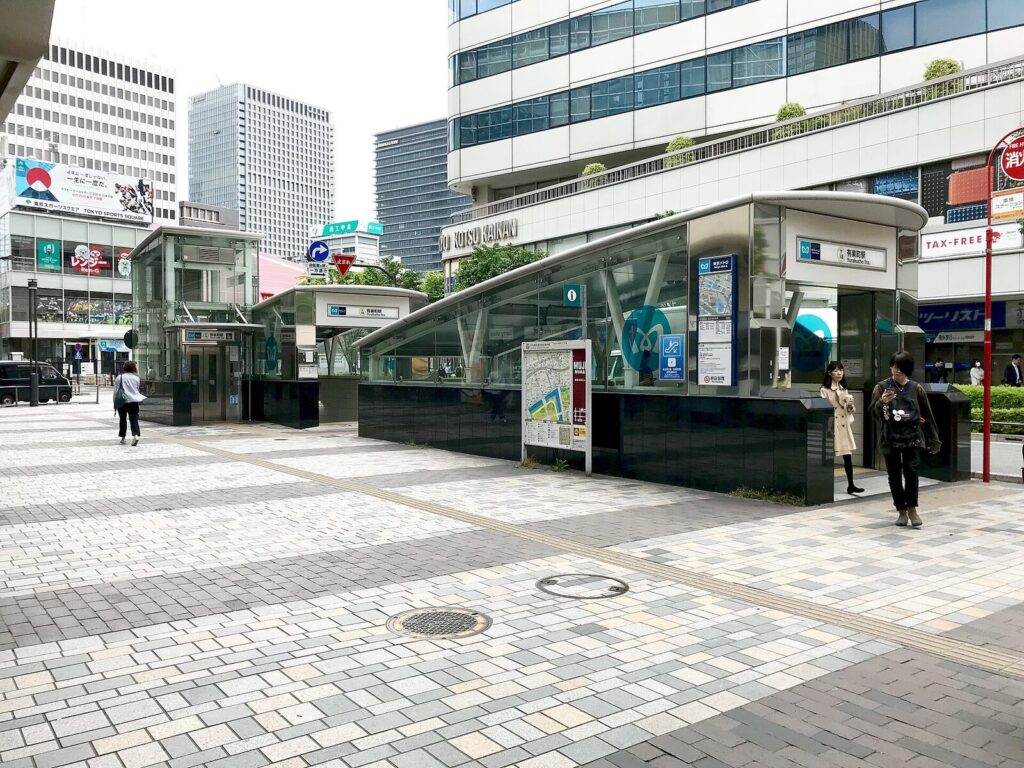
The building's own site lists shops for these regions:
- Hokkaido (Hokkaido Dosanko Plaza)
- Tokushima and Kagawa (one shared shop)
- Kesennuma, Kuji and Fukushima (one shared shop)
- Okinawa (Ginza Washita Shop)
- Akita, Wakayama and Toyama
- Hakata in Fukuoka
That's a lot of Japan in one building.
Hokkaido Dosanko Plaza is the big one. Chiyoda City's tourism site says it has more than 1,200 products from across Hokkaido: sweets, seafood, dairy and groceries. It also has Yubari melon soft serve and a deli counter with croquettes and zangi (Hokkaido-style fried chicken). Hours are 10:00–20:00, and it's open every day except over New Year.
Ginza Washita Shop is Okinawa's main shop and sits on the same floor. Okinawa Prefecture lists it as open 10:00–20:00 and closed only at the start of the New Year.
Honestly, this building is where I'd start, and it's not close. In about an hour you can taste your way from the far north to the far south, and you never have to cross a road.
🍶 Ginza: two clusters, ten minutes apart
Ginza's shops are in two groups, according to Chuo City's official list.
Ginza 1-chome (the end of Ginza nearest Yurakucho) has five regions within a short walk:
| Shop | Region | Hours |
|---|---|---|
| IBARAKI sense | Ibaraki | 10:30–20:00 |
| Marugoto Kochi | Kochi | 10:30–19:00 |
| Oishii Yamagata Plaza | Yamagata | 10:00–20:00 |
| Fukui Shoku no Kuni 291 | Fukui | 10:30–19:00 |
| Hiroshima Brand Shop TAU | Hiroshima | 10:30–20:00 |
TAU's own site features momiji manju (maple-leaf-shaped cakes, a classic Hiroshima souvenir) and Hiroshima sake.
Ginza 5-chome, near Ginza Station, has Kumamoto, Nagano, Niigata and Kanazawa. Iwate is a little further east, at 5-15-1.
If sake is the reason you're coming, go to THE NIIGATA. Its official site lists a shop on the first two floors (10:30–19:30) and a sake tasting stand open 12:00–19:30. You need to buy tasting tickets by 19:00. There's also an onigiri (rice ball) counter. Niigata is famous for its rice, so a rice ball here is the obvious order.
Two things to plan around. Ginza Kumamoto-kan is closed on the first Monday of each month. Iwate's shop closes at 17:00 on the last day of the month.
🚄 Nihonbashi and Yaesu: shop on your way to the bullet train
Catching a Shinkansen (bullet train) from Tokyo Station? Chuo City's list shows Ishikawa's Yaesu Ishikawa Terrace and the Hokkaido Foodist shop right on the Yaesu side of the station. Both are open until 20:00.
A short walk north, Nihonbashi has five more: Fukushima, Mie, Toyama, Shiga, Nagasaki and Yamaguchi. Mie Terrace and Coco Shiga stay open until 20:00. Most of the others close at 19:00 or 19:30.
Nihonbashi Fukushima-kan MIDETTE is open 10:30–19:00. Fukushima Prefecture's page highlights its sake, fruit and crafts. It's closed over New Year and on one building inspection day each year.
This is the part most visitors miss. Grab a regional ekiben-style snack or a bottle of local sake here before your train, and your trip feels a lot longer than it really is.
🍬 What to buy, and what to eat right there
As a rough rule:
- Take home: packaged sweets, rice crackers, noodles, seasonings, tea and small crafts. They're light, they keep, and they make good omiyage (お土産, souvenirs you bring back for friends and coworkers).
- Eat on the spot: soft serve, deli fried foods, rice balls and anything fresh or chilled. Fruit and vegetables go here too.
Ask about seasonal items. THE NIIGATA's October picks included Sado okesa persimmons and makomodake, a crunchy shoot that's hard to find outside the region. Shelves change with the harvest, which is half the fun.
📦 Can you send Japanese food home?
Often you can, but it depends on where you live. Japan Post says some items can't be sent to certain countries. Its most common examples are liquor, tobacco and meat.
The one that surprises people is beef. Where beef imports are restricted, Japan Post lists instant cup noodles, curry and instant consommé as items you can't send. Plenty of Japanese instant foods contain beef extract.
Before you post a big box, check Japan Post's country-by-country list of prohibited items. Sweets and rice crackers are usually the easiest category to send.
❓ FAQ
Do antenna shops take credit cards?
Many do, but each shop sets its own payment options. Carry some cash for the small ones.
Are antenna shops open on weekends?
Yes. Most are open every day, closing only over New Year. The Aomori shop in Shintomi is the one to watch: it's closed on Sundays and public holidays.
Can I find antenna shops outside Ginza and Yurakucho?
Yes, but Chuo City alone lists 19, and Kotsu Kaikan adds about ten more. For a short trip, these two areas cover more than enough.
Is the food more expensive than in the region itself?
The shops exist to promote local products, so prices are generally close to what you'd pay locally. Gift boxes are priced as gifts, though.
🧳 Quick recap
- Antenna shops are regional stores run for each prefecture, and they sell what locals actually eat.
- Start at Tokyo Kotsu Kaikan in Yurakucho, then walk to Ginza 1-chome and 5-chome.
- Use the Nihonbashi and Yaesu shops for last-minute buys before a bullet train.
- Hours are mostly 10:00–20:00. Note the closures for Kumamoto (first Monday) and Aomori (Sundays).
- Your suitcase only holds so much. Before you fly, decide which regional snacks you want waiting at home, so you're not cramming boxes in on your last night.
Get the taste of Japan sent home

TokyoTreat — Japan-only snacks, monthly
- In the boxJapan-exclusive snacks, a drink and a snack guide
- Ships toWorldwide
- PlanMonthly, a new theme each time

Sakuraco — traditional sweets and tea
- In the box20 Japanese sweets, a tea pairing and a home-goods item
- Ships toWorldwide
- PlanMonthly, a new theme each time
Show sources
- アンテナショップ — Chuo City, Tokyo (中央区) (accessed 2026-11-02)
- Tokyo Kotsukaikan | The Official Tokyo Travel Guide, GO TOKYO — Tokyo Convention & Visitors Bureau (accessed 2026-11-02)
- 東京交通会館 | 銀座・有楽町 — Tokyo Kotsu Kaikan (accessed 2026-11-02)
- 北海道どさんこプラザ 有楽町店(スポット紹介) — Chiyoda City Tourism Association (accessed 2026-11-02)
- 首都圏における沖縄物産情報 — Okinawa Prefecture (accessed 2026-11-02)
- 福島県首都圏情報発信拠点「日本橋ふくしま館(MIDETTE)」 — Fukushima Prefecture (accessed 2026-11-02)
- 銀座・新潟情報館 THE NIIGATA — THE NIIGATA (Niigata Prefecture) (accessed 2026-11-02)
- TAU -ひろしまブランドショップ- — Hiroshima Brand Shop TAU (accessed 2026-11-02)
- Nonmailable Articles in International Mail — Japan Post (accessed 2026-11-02)

Keep reading
Akihabara vs Nakano Broadway vs Ikebukuro: Anime Shopping Guide
Akihabara for figures and cards, Nakano Broadway for retro finds, Ikebukuro for female-oriented fandom. Here's how to pick, plus the new tax…
Sencha vs Hojicha vs Genmaicha: Japan’s Everyday Teas Explained
Sencha, hojicha or genmaicha? What Japanese people really drink at home, how much caffeine each one has, what 100 g costs and…
Shiroi Koibito vs Royce vs LeTAO: Which to Bring Home
Shiroi Koibito, Royce or LeTAO? Compare price, shelf life, heat, and where to buy in Hokkaido or Tokyo, so the right sweet…