Japanese Regional Snacks (Gotochi): What to Buy and Where
Gotochi snacks are Japanese treats sold in one region only. Here are the famous ones, the Tokyo shops that stock them, and how to get them home.
On this page
Disclosure Some links on this page are affiliate links. If you buy through them we may earn a small commission at no extra cost to you. It never changes what we recommend.
This article contains affiliate links. We may earn a commission at no extra cost to you.
You're in a supermarket in Osaka and the crisp aisle has bags you've never seen online. They aren't new. They're gotochi snacks, sold in one part of Japan only, and some won't turn up anywhere else on your trip.
Here's the good news. You don't need to visit every region to try them. Tokyo has shops run by the regions themselves, airports stock the famous ones, and snack boxes ship them to you.
The short version:
- Gotochi snacks are made for one region and sold mostly there, often in shops that sell souvenirs.
- The big makers do this on purpose. Calbee and Morinaga both run region-only ranges.
- If you're only in Tokyo, head to the "antenna shops" at Yurakucho. Hokkaido and Okinawa share one building there.
🍬 What does "gotochi" actually mean?
It's a single word that explains a whole shelf of Japanese snacks.
Gotochi (ご当地) means "of this particular place." A gotochi snack uses a local ingredient or flavour and is sold in that area only.
It sits right next to another word you'll hear: omiyage (お土産), the souvenirs Japanese people bring back for friends and co-workers after a trip. Bringing back something you can't buy at home is the whole point. That's why region-only packs are so common.
Morinaga's own release on its Hi-Chew souvenir range says it plainly. The series uses famous fruit from "Hokkaido in the north to Okinawa in the south" and is designed as the right thing to bring back from a trip or a work visit.
🗾 Which region-only snacks are worth looking for?
Every item below comes from the maker's own Japanese news release. Look for the kanji on the bag, too. 限定 (gentei) means "limited," and you'll often see it next to a place name.
| Snack | Region | Where the maker sells it |
|---|---|---|
| Jaga Pokkuru (じゃがポックル), Calbee | Hokkaido | Hokkaido souvenir shops, duty-free shops at airports across Japan, Calbee Plus at New Chitose Airport, Tokyo Station and Kokusai-dori in Okinawa |
| Jagaimo-michi crisps (じゃがいも道), Calbee | Hokkaido | Hokkaido supermarkets, drugstores, some convenience stores. Sold seasonally, roughly autumn to spring |
| Tokai Ebi-shio crisps (東海えびしお味), Calbee | Chubu (Aichi, Mie, Gifu, Shizuoka, Ishikawa, Toyama, Fukui) | Shops in that area |
| Kansai Aji Roman crisps (関西味浪漫), Calbee | Kinki (Osaka, Hyogo, Kyoto, Shiga, Nara, Wakayama) | Shops in those six prefectures |
| Kataage Potato Miso Katsu (堅あげポテト 味噌カツ味), Calbee | Tokai / Nagoya | Souvenir shops at airports, stations and motorway stops |
| Omiyage Hi-Chew (おみやげハイチュウ), Morinaga | Area by area: Yubari melon (Hokkaido), Setouchi lemon (Chugoku and Shikoku), Amaou strawberry (Kyushu), shikuwasa (Okinawa) and more | Souvenir shops in each area |
There are a few nice details in those releases.
Jaga Pokkuru has been a Hokkaido souvenir for more than 20 years. It's made from whole Hokkaido potatoes with the skin left on. In March 2026, Calbee made the corn flavour (tokibi, Hokkaido dialect for corn) a permanent flavour because customers kept asking for it. The release quotes one customer review: "販売期間が終わるまでリピートします," which means "I'll keep buying it until it's gone."
The Tokai Ebi-shio crisps use Ise lobster from Mie. Calbee says it's the first new Tokai flavour in 13 years. White soy sauce had held that spot since 2012.
The Kansai pair is a good example of local logic. Dashi-shio is based on bonito-and-kelp stock, and the nori flavour copies the sweet seasoned seaweed that Calbee calls a staple in Kansai homes. These are flavours from home kitchens, not tourist gimmicks.
Honestly, if you can only bring home one thing, make it Jaga Pokkuru. It's the easiest to find, because it's sold at airport duty-free shops nationwide and at Tokyo Station. That makes it the rare gotochi snack you can still grab on your way out.
🛍 Can you buy them in Tokyo?
Yes, mostly. Tokyo is full of antenna shops (アンテナショップ), which are shops run by a prefecture or city to sell its own food and crafts in the capital.
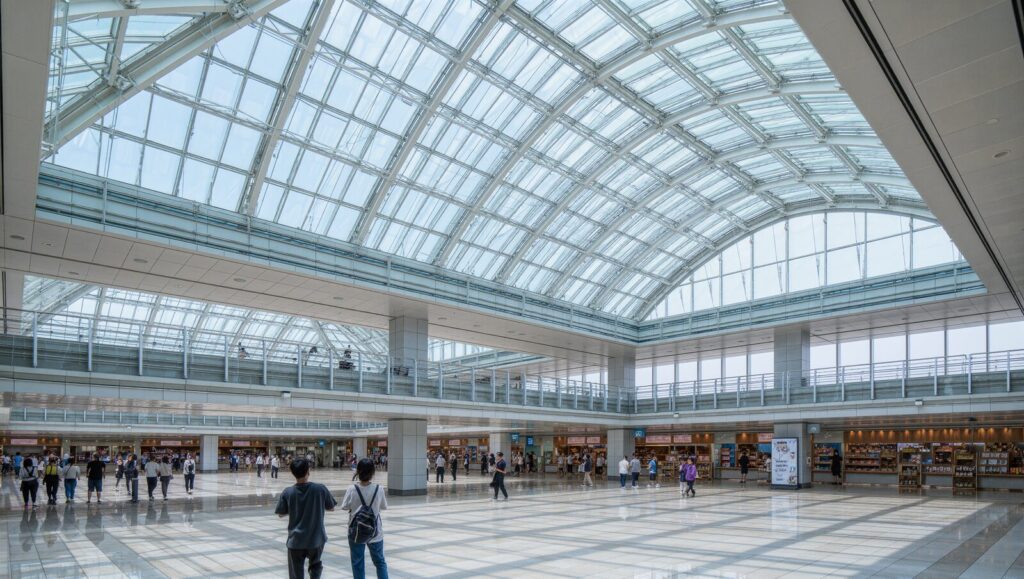
There are more than you'd think. A survey by the Japan Center for Regional Development counted 67 in Tokyo in April 2022. Akita Prefecture republished it in its own report.
If you only have one afternoon, go to Tokyo Kotsu Kaikan, the building right outside JR Yurakucho Station. Chiyoda City's tourism association counted 15 antenna shops in that one building.
Two of the big ones share the ground floor:
- Hokkaido Dosanko Plaza (北海道どさんこプラザ) stocks more than 1,200 Hokkaido products, from sweets and dairy to dried snacks. It's open 10:00–20:00 and is about a one-minute walk from the station. It was also the only antenna shop in that survey with more than one million visitors in a year.
- Ginza Washita Shop (銀座わしたショップ) sells Okinawan products. It moved here from Ginza in February 2023 and is open 10:00–20:00 (closed over New Year).
That's the part people miss. Hokkaido and Okinawa, the two ends of the country, are a few steps apart in central Tokyo. One building covers the Yubari melon Hi-Chew and the shikuwasa Hi-Chew.
One thing worth knowing: antenna shops change what they stock with the season. The seasonal crisps like Jagaimo-michi are sold in Hokkaido itself. So treat Tokyo as a strong backup, not a full copy of every regional shelf.
🚄 When is the best time to buy them?
Buy them where you find them. And if you're travelling around Japan, aim for the last stop.
Morinaga's 2026 release describes its sales area as Hokkaido's "souvenir route" (土産ルート): airports, stations and souvenir shops. Calbee's Miso Katsu crisps follow the same pattern. These shops are on your way out of a region, which makes buying easy.
Here's how that plays out depending on your plans:
- If you're visiting Hokkaido or Okinawa, buy at the airport on your way out. That's where the makers sell these first.
- If you're doing a Tokyo–Kyoto–Osaka loop, check a supermarket in Osaka or Kyoto for the Kansai crisps. They're everyday snacks there, so you'll find them in normal shops.
- If you're only in Tokyo, do Yurakucho for antenna shops and Tokyo Station for Jaga Pokkuru.
Calbee doesn't set retail prices for any of these. Its releases list them as "open price" (オープン価格), so each shop sets its own. Check prices on the spot rather than expecting one fixed number.
📦 Can you get gotochi snacks without going there?
This is where snack boxes come in.
Region-only snacks are hard to buy from abroad because the makers sell them through physical shops in that region. That's exactly why snack box services exist. They buy in Japan and ship a mix to you.
Two things are worth checking before you order:
- Season. Jagaimo-michi is sold roughly autumn to spring. A box sent in summer is more likely to have the permanent items.
- What "regional" means on the listing. A box built around one area, like Hokkaido or Kyushu, tends to have more true gentei items than a general mix.
My take: a snack box is a great way to find your favourite before the trip. Then you know exactly which bag to hunt down once you land.
❓ FAQ
Are gotochi snacks only sold in that region?
Mostly, but not always. Jaga Pokkuru, for example, is also sold at airport duty-free shops across Japan and at Tokyo Station, according to Calbee.
Where are the antenna shops in Tokyo?
Most are around Ginza, Yurakucho and Nihonbashi. Tokyo Kotsu Kaikan, next to JR Yurakucho Station, has 15 in one building, including the Hokkaido and Okinawa shops.
Can I take these snacks home on the plane?
Sealed, dry snacks like crisps and candy are generally fine in your luggage. Check your own country's customs rules before you fly, especially for anything with meat or dairy.
How do I spot a region-only pack in the shop?
Look for 限定 (gentei, "limited") next to a place name, like 北海道限定 (Hokkaido only). Morinaga's newer Hi-Chew boxes also print "HI-CHEW" in large letters so visitors can spot them.
🧳 Recap
- Gotochi (ご当地) snacks are made for one region and sold mainly through its souvenir shops and supermarkets.
- Calbee and Morinaga both run official region-only ranges. Start with Jaga Pokkuru and the omiyage Hi-Chew.
- In Tokyo, Tokyo Kotsu Kaikan at Yurakucho puts Hokkaido and Okinawa a few steps apart.
- Seasonal items like Jagaimo-michi are mostly sold in the region itself, so buy them when you see them.
- Before you fly, order a regional snack box so you know which flavours to look for when you land.
Get the taste of Japan sent home

TokyoTreat — Japan-only snacks, monthly
- In the boxJapan-exclusive snacks, a drink and a snack guide
- Ships toWorldwide
- PlanMonthly, a new theme each time

Sakuraco — traditional sweets and tea
- In the box20 Japanese sweets, a tea pairing and a home-goods item
- Ships toWorldwide
- PlanMonthly, a new theme each time
Show sources
- ニュースリリース 『じゃがポックル 北海道とうきび味』 | カルビー株式会社 — Calbee, Inc. (accessed 2026-11-01)
- ニュースリリース 『じゃがいも道 ほたてと昆布の旨しお味/バター薫る北海道たまねぎの極旨味』 | カルビー株式会社 — Calbee, Inc. (accessed 2026-11-01)
- ニュースリリース 『ポテトチップス 東海えびしお味』 | カルビー株式会社 — Calbee, Inc. (accessed 2026-11-01)
- ニュースリリース 『ポテトチップス関西味浪漫 だししお味/味付けのり風味』 | カルビー株式会社 — Calbee, Inc. (accessed 2026-11-01)
- ニュースリリース 『堅あげポテト 味噌カツ味』 | カルビー株式会社 — Calbee, Inc. (accessed 2026-11-01)
- 北海道の旅の思い出を彩る、新土産 「ハイチュウ<夕張メロン味>」2月上旬リニューアル発売 — Morinaga & Co., Ltd. (accessed 2026-11-01)
- 「おみやげハイチュウ」がリニューアル! 日本各地の味わいが、さらに美味しく、さらにジューシーに! — Morinaga & Co., Ltd. (accessed 2026-11-01)
- 都内の他県アンテナショップの状況について — Akita Prefectural Government (accessed 2026-11-01)
- 首都圏における沖縄物産情報 — Okinawa Prefectural Government (accessed 2026-11-01)
- 北海道どさんこプラザ 有楽町店(スポット紹介) — Chiyoda City Tourism Association (accessed 2026-11-01)
- Traveling Japan without leaving the city: Exploring Tokyo’s ‘Antenna Shops’ at Tokyo Kotsu Kaikan — Chiyoda City Tourism Association (accessed 2026-11-01)

Keep reading
Akihabara vs Nakano Broadway vs Ikebukuro: Anime Shopping Guide
Akihabara for figures and cards, Nakano Broadway for retro finds, Ikebukuro for female-oriented fandom. Here's how to pick, plus the new tax…
Sencha vs Hojicha vs Genmaicha: Japan’s Everyday Teas Explained
Sencha, hojicha or genmaicha? What Japanese people really drink at home, how much caffeine each one has, what 100 g costs and…
Shiroi Koibito vs Royce vs LeTAO: Which to Bring Home
Shiroi Koibito, Royce or LeTAO? Compare price, shelf life, heat, and where to buy in Hokkaido or Tokyo, so the right sweet…