Regional Foods Worth a Shinkansen Detour in Japan (and Which Pass)
Sendai gyutan, Hiroshima okonomiyaki, Hakata ramen, Kanazawa crab: which regional foods Japanese people travel for, and which rail pass fits the trip.
On this page
- 🍜 Why do Japanese people plan whole trips around one dish?
- 🦀 Is Kanazawa crab worth the trip right now?
- 🥞 Hiroshima okonomiyaki: how is it different, and what do you order?
- 🍥 Hakata ramen: how do you order like a local?
- 🐄 Sendai gyutan: the easiest food detour from Tokyo
- 🚄 Which rail pass fits a food trip?
- ❓ FAQ
- 🧳 Recap
- Sources
Disclosure Some links on this page are affiliate links. If you buy through them we may earn a small commission at no extra cost to you. It never changes what we recommend.
This article contains affiliate links. We may earn a commission at no extra cost to you.
If you're coming in November or December, Kanazawa's female snow crab is the regional food most worth changing your route for. Its season lasts only from November 6 to December 29. Hiroshima okonomiyaki comes a close second, because it sits on the same rail line as places you probably want to see anyway.
Sendai beef tongue is the easiest add-on from Tokyo. Hakata ramen works best as a reward if you're already heading to Kyushu. For a loop through two or more of these cities, the nationwide Japan Rail Pass is the pass to look at.
Quick verdict:
- Nov–Dec trip: go to Kanazawa for crab. The window is about eight weeks.
- Tokyo–Kyoto route: carry on to Hiroshima for okonomiyaki.
- Two or more of these cities in a week: compare your train tickets with a 7-day Japan Rail Pass.
🍜 Why do Japanese people plan whole trips around one dish?
Here's the short answer: the dish is the trip. Japanese travel has a word for it, gotōchi gurume (ご当地グルメ, "local-specialty food"). It means the dish a city is famous for, and the one people expect you to eat while you're there.
Something most English guides leave out: these famous dishes are mostly young. Sendai City says the first beef-tongue restaurant opened in 1948. Hiroshima Prefecture says okonomiyaki took its modern shape around 1950. Fukuoka's tourism association traces Hakata ramen back to a street stall in 1940.
They're postwar city food, and none of them appears in the regional lists of kyōdo ryōri (郷土料理, traditional home cooking) on the Ministry of Agriculture's "Uchi no Kyōdo Ryōri" site. That list has older dishes instead. Sendai has zunda mochi (rice cake with sweet green soybean paste). Kanazawa has jibuni (duck simmered in a flour-thickened broth). Fukuoka has goma saba (raw mackerel dressed with sesame).
What this means for you: the famous dish brings you to the city, and the older dish is often a short walk away. Eat both.
🦀 Is Kanazawa crab worth the trip right now?
Yes, if your dates fall between November 6 and December 29. That's the season for kōbako-gani (香箱ガニ), Ishikawa's name for the female snow crab, according to Kanazawa's official tourism site.
The females are small, with shells about 7–9 cm wide. You eat them for what's inside: the meat, the innards and two kinds of roe. The males are sold as Kanō-gani and grow to about 15 cm.
My favourite way in is the cheapest one: Kanazawa oden. In November and December, oden pots around the city add kani-men, a whole female crab packed back into its own shell and served in the broth. The official guide calls it a seasonal winter delicacy. It's one of the few ways to try crab without booking a full crab dinner.
For a first look, go to Omichō Market. It has more than 170 stores, it's been part of the city's food life for over 300 years, and the tourism association says crab, yellowtail and shrimp are prized around November, when the market is at its busiest. Opening hours are 9:00–16:00, but each store sets its own, so go in the morning.
Honestly, this is the detour I'd make first. Okonomiyaki and ramen are on the menu all year. Kōbako crab disappears after December 29.
🥞 Hiroshima okonomiyaki: how is it different, and what do you order?
It's layered, not mixed. Hiroshima Prefecture's own guide describes thin batter, a big pile of cabbage, noodles and egg, cooked in layers on an iron griddle. You eat it straight off the griddle with chopsticks or a small spatula.
The standard order is niku-tama-soba (肉玉そば): pork, egg and soba-style noodles. Say that and you'll get the classic. Locals add squid, shrimp, cheese or mochi on top.
The prefecture says Hiroshima has the most okonomiyaki shops per person in Japan. It also lists local styles outside the city. Onomichi-yaki adds chicken gizzard and squid tempura. Fuchū-yaki uses minced meat instead of pork belly.
Hiroshima is easy to add because of where it is. It's on the Sanyo Shinkansen, the line that carries on west from Osaka. If your plan already covers Kyoto, Osaka and maybe Miyajima, okonomiyaki costs you a dinner, not an extra day.
🍥 Hakata ramen: how do you order like a local?
Ask for your noodles a little firm. Fukuoka's official tourism site explains that Hakata's thin noodles soften quickly in the hot pork-bone broth, so locals often order them firmer than "normal".
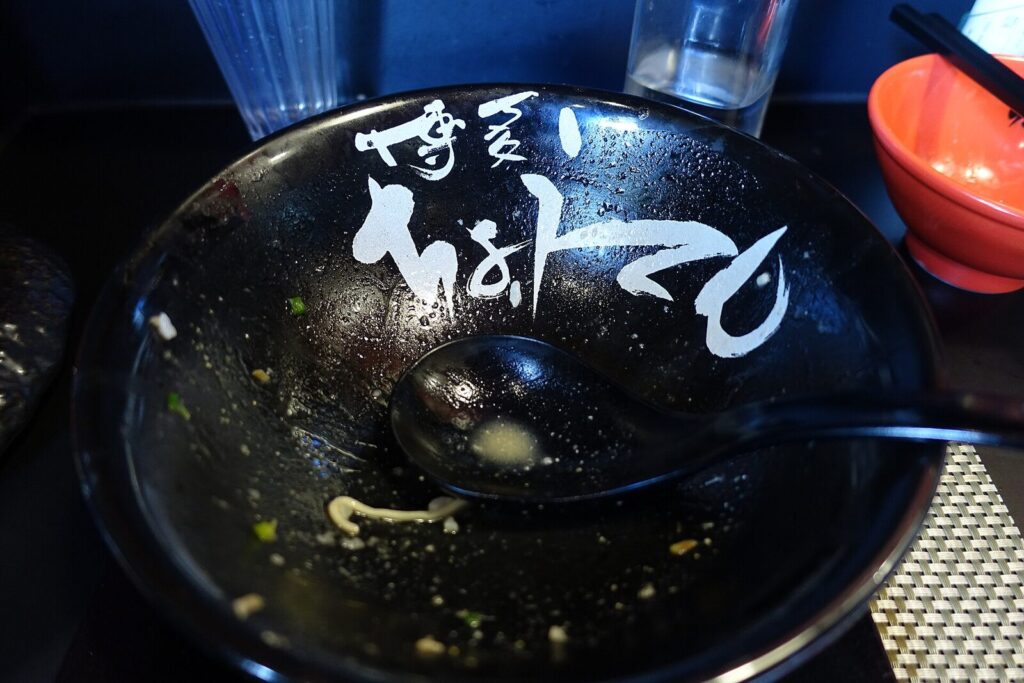
Then comes kaedama (替え玉): a second serving of noodles only, dropped into the soup you still have. The tourism site's tip is to order it before you finish your first serving. Ask for it slightly softer, because your soup has cooled by then.
The same page traces the style to the Sanmaro street stall in 1940. Later shops picked up the creamy broth technique from Kurume and the thin noodles and kaedama from Nagahama. The page also says there's no strict line between the three styles, so don't worry about getting the label right.
Hakata is the far end of the Sanyo line from Tokyo. If you're going to Kyushu anyway, or you've already reached Hiroshima, it's a natural next stop. As a single detour from Tokyo, it suits travellers who love ramen enough to give it a whole day.
🐄 Sendai gyutan: the easiest food detour from Tokyo
Sendai is the closest of the four to Tokyo. Thick-cut grilled beef tongue (gyūtan, 牛たん) is the reason most people go. The city says the first specialist restaurant opened in 1948, and the dish spread across Japan from there.
Leave room for something sweet. The Ministry of Agriculture lists zunda mochi as a traditional dish of the Sendai and Matsushima area. It's rice cake coated in a bright green paste of crushed edamame, said to have been a favourite of the local lord Date Masamune.
Gyutan suits a day trip or a stop on the way north. If Tohoku isn't in your plan otherwise, it's still the simplest way to get one regional food into a Tokyo-based trip.
🚄 Which rail pass fits a food trip?
Count the cities first. The pass that makes sense depends on how many of these four you're visiting.
| Your plan | Pass to look at | Price (as of 2026-11) |
|---|---|---|
| Two or more of Sendai, Kanazawa, Hiroshima, Hakata in one week | Japan Rail Pass, 7 days (ordinary car) | ¥50,000 on the official site; ¥53,000 through overseas agencies |
| Tokyo → Kanazawa → Kyoto/Osaka in one week | Hokuriku Arch Pass, 7 days | ¥35,000 adult |
| One food city, out and back | No pass. Buy single tickets | n/a |
A note on Japan Rail Pass prices. JNTO says the price went up on October 1, 2026, and the 7-day ordinary pass now costs ¥53,000. The official JR Pass site is still offering the old ¥50,000 for a limited time when you buy online, as of 2026-11. That difference pays for a few good dinners, so check the official site before you buy anywhere else.
If your Japan Rail Pass trip goes to Hiroshima or Hakata, there's one detail to know. The fastest trains on that line, Nozomi and Mizuho, need an extra "special ticket" on top of the pass. As of 2026-11, it costs ¥6,500 for Tokyo–Hiroshima and ¥4,960 for Shin-Osaka–Hakata. Seats are limited, and you need a new ticket for every ride.
The Hokuriku Arch Pass runs from Tokyo through Kanazawa to the Kansai area (Kyoto and Osaka). It's for overseas visitors with Temporary Visitor status. It doesn't include the Tokaido or Sanyo Shinkansen, so Hiroshima and Hakata are outside it.
My take: if Kanazawa crab is your one big food trip this winter, the Arch Pass is the neat choice. If you want okonomiyaki and ramen and crab, that's the long loop the Japan Rail Pass was made for.
❓ FAQ
Can I eat kōbako crab in January?
The official Kanazawa season for female snow crab ends on December 29. The larger male Kanō crab is caught for longer, so ask for that if you arrive after the New Year.
Is Hiroshima okonomiyaki the same as Osaka's?
No. Hiroshima's version is built in layers, with noodles and lots of cabbage. Osaka's is mixed into one batter before cooking.
What does "kaedama" mean?
It's a refill of noodles only, added to the soup you still have. Order it a little before you finish your first serving.
Does the Japan Rail Pass cover Nozomi trains?
Only with an extra special ticket, which pass holders can buy at JR ticket machines and offices up to one month before the trip.
Do I need a pass for one food day trip?
Usually not. A pass pays off when you link several long trips within its 7 days.
🧳 Recap
- Japanese travellers plan trips around gotōchi gurume, a city's signature dish. Most of the famous ones date from after the war.
- Kanazawa's female snow crab has the shortest window, November 6 to December 29, which makes it the top detour this season.
- Hiroshima okonomiyaki and Sendai gyutan are easy to add to a normal route. Hakata ramen fits trips that already reach Kyushu.
- Two or more of these cities in a week: compare the 7-day Japan Rail Pass (¥50,000 on the official site as of 2026-11). For Tokyo–Kanazawa–Kansai only, look at the Hokuriku Arch Pass.
- Before you fly, decide which cities you're eating in and sort out your pass. If a city doesn't fit this time, a box of its regional snacks lets you taste it from home.
Get the taste of Japan sent home

TokyoTreat — Japan-only snacks, monthly
- In the boxJapan-exclusive snacks, a drink and a snack guide
- Ships toWorldwide
- PlanMonthly, a new theme each time

Sakuraco — traditional sweets and tea
- In the box20 Japanese sweets, a tea pairing and a home-goods item
- Ships toWorldwide
- PlanMonthly, a new theme each time
Show sources
- 九州地方 福岡県 | うちの郷土料理:農林水産省 — Ministry of Agriculture, Forestry and Fisheries (MAFF) (accessed 2026-11-01)
- 東北地方 宮城県 | うちの郷土料理:農林水産省 — Ministry of Agriculture, Forestry and Fisheries (MAFF) (accessed 2026-11-01)
- 北陸地方 石川県 | うちの郷土料理:農林水産省 — Ministry of Agriculture, Forestry and Fisheries (MAFF) (accessed 2026-11-01)
- 中国地方 広島県 | うちの郷土料理:農林水産省 — Ministry of Agriculture, Forestry and Fisheries (MAFF) (accessed 2026-11-01)
- 広島県民のソウルフード「お好み焼」にまつわる歴史と7つの常識(?)を調査! | 徹底解剖!ひろしまラボ — Hiroshima Prefecture (accessed 2026-11-01)
- 【福岡グルメ】博多・長浜・久留米の違いとは?とんこつラーメン大解剖! — Fukuoka Prefecture Tourism Association (Crossroad Fukuoka) (accessed 2026-11-01)
- ふるさと納税 返礼品のご紹介 — Sendai City (accessed 2026-11-01)
- Omicho Market | VISIT KANAZAWA, JAPAN – Official Travel Guide — Kanazawa City Tourism Association (accessed 2026-11-01)
- Kanazawa Oden: A Complete Guide to Its Signature Ingredients, Local Flavors, and Seasonal Crab Speciality — Kanazawa City Tourism Association (accessed 2026-11-01)
- JAPAN RAIL PASS prices — JR Group (Official Japan Rail Pass website) (accessed 2026-11-01)
- Use of NOZOMI and MIZUHO Shinkansen bullet trains — JR Group (Official Japan Rail Pass website) (accessed 2026-11-01)
- Price Increases Are Coming to the Nationwide Japan Rail Pass (2026) — Japan National Tourism Organization (JNTO) (accessed 2026-11-01)
- Hokuriku Arch Pass — West Japan Railway Company (JR West) (accessed 2026-11-01)

Keep reading
Akihabara vs Nakano Broadway vs Ikebukuro: Anime Shopping Guide
Akihabara for figures and cards, Nakano Broadway for retro finds, Ikebukuro for female-oriented fandom. Here's how to pick, plus the new tax…
Sencha vs Hojicha vs Genmaicha: Japan’s Everyday Teas Explained
Sencha, hojicha or genmaicha? What Japanese people really drink at home, how much caffeine each one has, what 100 g costs and…
Shiroi Koibito vs Royce vs LeTAO: Which to Bring Home
Shiroi Koibito, Royce or LeTAO? Compare price, shelf life, heat, and where to buy in Hokkaido or Tokyo, so the right sweet…