Seasonal Japanese Sweets: What to Eat in Japan Month by Month
Sakura mochi from late February, kakigori from May, chestnut from September, strawberry from late winter. Here's which sweets will be out during your trip.
On this page
Disclosure Some links on this page are affiliate links. If you buy through them we may earn a small commission at no extra cost to you. It never changes what we recommend.
This article contains affiliate links. We may earn a commission at no extra cost to you.
You're walking past a sweet shop in Tokyo and there's a pink mochi in the window, wrapped in a leaf, even though there isn't a cherry blossom anywhere. That isn't a mistake. In Japan, seasonal sweets show up before the season they celebrate, and locals look forward to them the way other people look forward to a holiday.
The short version:
- Late Feb–early April: sakura mochi and cherry-blossom sweets. May–September: kakigori (shaved ice).
- Mid-September into autumn: chestnut everything. Late winter into spring: strawberry daifuku and other strawberry sweets.
- Look for the words kisetsu gentei (季節限定, "season-limited") on labels. Those are the treats Japanese people are actually excited about.
🍡 Why do Japanese sweets change with the seasons?
Seasonal sweets are a calendar you can eat, and they keep pace with Japan's festivals and holidays.
Toraya, a Tokyo wagashi (和菓子, traditional Japanese sweets) maker, says on its own site that wagashi come from "annual events, the seasons, and life milestones." It also calls wagashi "a total art of the five senses." That includes the name: every sweet gets a poetic kamei (菓銘, the sweet's given name).
The rhythm goes deeper than four seasons. Toraya links its sweets to the 24 sekki (二十四節気, the old solar terms that split the year into 24 short seasons). It also links them to extra Japanese dates such as Setsubun and Higan. Its official wagashi calendar ties sweets to events all year: Hinamatsuri and flower viewing in March, Wagashi Day in June, moon viewing in September and October, and the winter solstice in December.
This is the part most visitors miss. The sweet comes first and the season follows. Eating a sakura sweet in early March is a way of saying "spring is nearly here."
🌸 When can you eat sakura mochi in Japan?
If your trip falls between late February and early April, you're in luck.
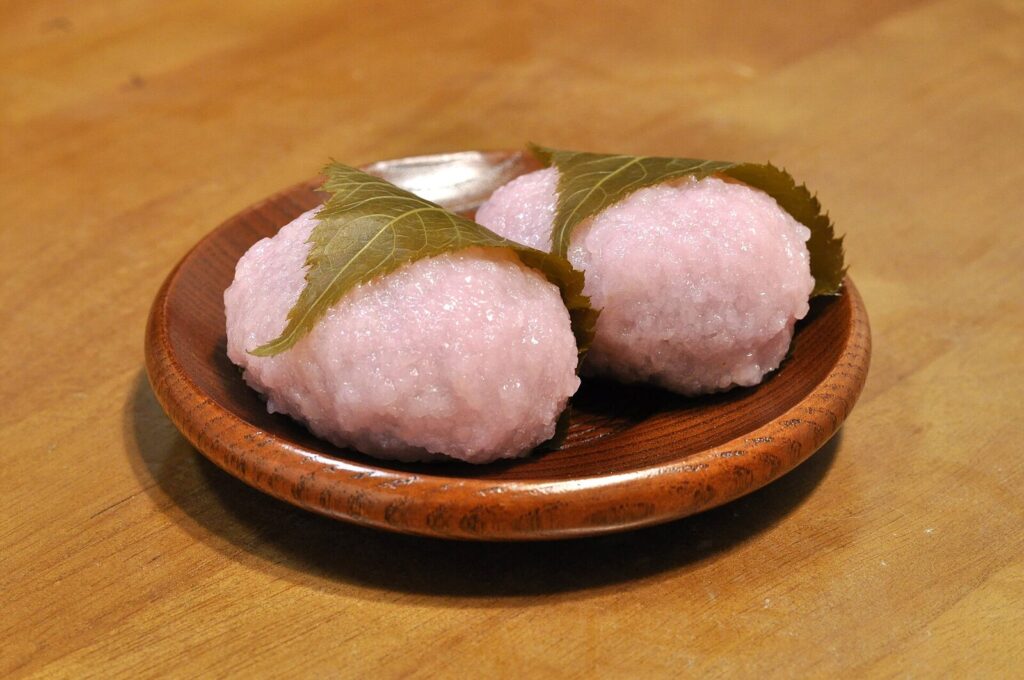
In 2025, Toraya sold its sakura mochi from 25 February to 5 April, which is weeks before most cherry trees open. JNTO, Japan's national tourism organization, gives a slightly later window and says spring wagashi are "usually available from March to April." So late February is the early start, and March is the safe bet.
There are two styles, and it's fun to try both:
| Style | Where it comes from | What it's like |
|---|---|---|
| Chomeiji (長命寺) | Tokyo / Kanto | A thin, crepe-like sheet folded around red bean paste |
| Domyoji (道明寺) | Kyoto / Kansai | A round, slightly grainy ball of sticky rice with bean paste inside |
Both come wrapped in a salt-pickled cherry leaf, and JNTO confirms the leaf is edible. The salty leaf against the sweet bean paste is the whole point.
Wagashi shops also change their sakura designs during the season. In 2025, Toraya sold three cherry-themed fresh sweets for just 16–31 March, a window of about two weeks. If you see one you like, buy it that day.
🍧 When is kakigori season in Japan?
Kakigori (かき氷) is shaved ice, finer and softer than a snow cone, poured with syrup. You'll find it from early summer to the end of September.
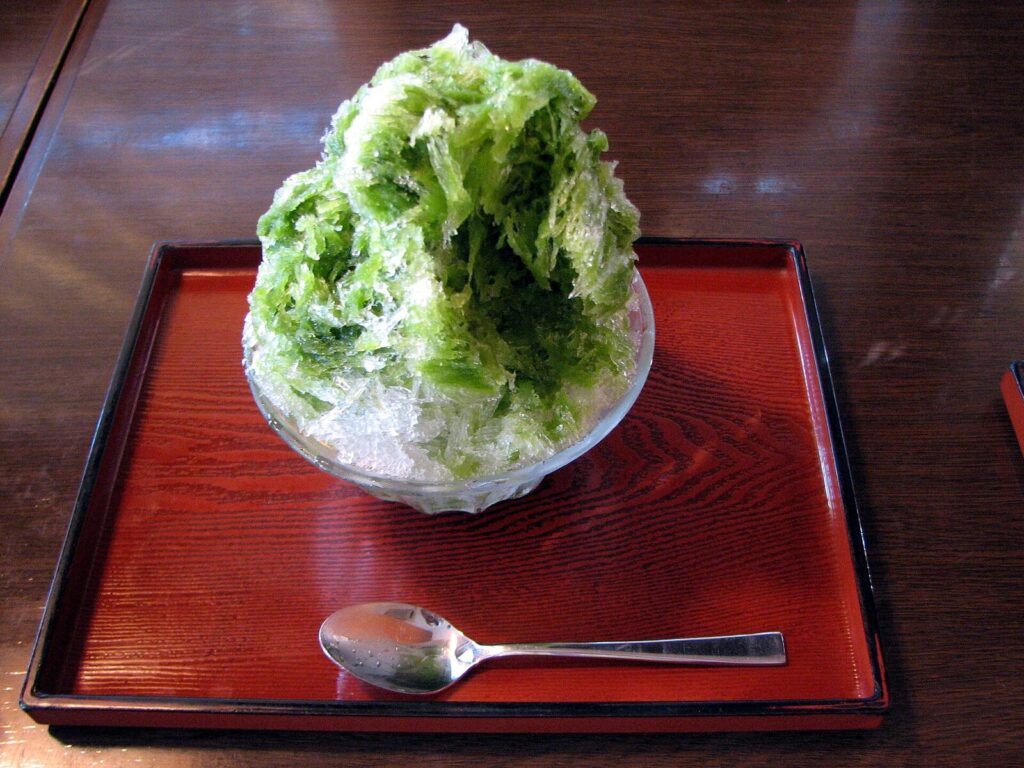
Toraya's tea rooms (虎屋菓寮, Toraya Karyo) started their 2026 kakigori on 1 May. The classic Uji Kintoki ran until 30 September: red bean paste under the ice, with a rich matcha syrup on top. Shorter summer-only flavours ran 1 July–31 August, such as green yuzu at the two Kyoto shops.
Honestly, if you're in Japan between May and September and only have time for one sit-down sweet, make it kakigori. It's built for Japanese humidity, and the classic version runs the whole season, so the dates are easy to plan around.
🌰 What sweets are in season in autumn?
If you're flying in the next few weeks, chestnut (kuri, 栗) is everywhere right now.
Autumn shows up even in convenience stores. Lawson's official site listed new chestnut and sweet potato desserts in two waves, on 15 and 22 September 2026. They included chestnut Mont Blanc cakes, a Mont Blanc tart and a roll cake made with chestnut flour. At the time of writing, the Mont Blanc tart was ¥340, about the price of a takeaway coffee.
Wagashi makers mark autumn with more ceremony. In 2025, Toraya's tea rooms served a chestnut kakigori, kuri-gori, from 22 September to 10 October, with small shiratama rice dumplings meant to recall moon-viewing dango. Toraya's calendar puts moon viewing (tsukimi, 月見) across September and October, which is why autumn sweets lean on round, moon-like shapes.
My take: the convenience store is the easiest place to start. Seasonal lines change every few weeks, they're open late, and you can try three autumn flavours for the price of one café dessert.
🍓 When can you get strawberry daifuku?
Strawberry daifuku (いちご大福) is a whole strawberry and bean paste wrapped in soft mochi. It's newer than you'd guess.
Osumi Tamaya, a Shinjuku sweet shop founded in 1912, created its ichigo mame daifuku in 1985, and many shops followed. The original white version is now sold all year. Its pink version is seasonal and usually appears from about March to June.
Strawberry also gets a late-winter spotlight. In 2025, Toraya sold a strawberry mini yokan (羊羹, a firm sweet bean jelly) from 15 February to early April, right before the sakura sweets arrived.
If you're coming between February and spring, keep an eye out for pink packaging. That's when strawberry and sakura overlap, and a wagashi counter looks its prettiest.
📅 What should I look for on my travel dates?
Find your month in the table below.
| If you visit in… | Look for | Good places to look |
|---|---|---|
| Late Feb–early April | Sakura mochi, cherry-themed wagashi, strawberry sweets | Wagashi shops, department-store food halls |
| May–September | Kakigori | Tea rooms, cafés, summer festival stalls |
| June | Wagashi Day (16 June on Toraya's calendar) | Wagashi shops |
| Mid-September–autumn | Chestnut sweets, moon-viewing themes | Convenience stores, wagashi shops |
| Winter into spring | Strawberry daifuku, strawberry wagashi | Wagashi shops |
One tip before you go: learn the characters for kisetsu gentei (季節限定). They're printed on everything from convenience-store desserts to wagashi boxes, and they mean the item won't be there next month.
❓ FAQ
Can I eat the leaf on sakura mochi?
Yes. JNTO notes the salt-pickled cherry leaf is edible. Some people peel it off, but many enjoy the salty taste with the sweet filling.
What's the difference between wagashi and Japanese snacks?
Wagashi are traditional sweets, often made with bean paste and rice, and fresh ones are meant to be eaten the same day. "Japanese snacks" usually means packaged treats like crackers, chocolates and candy, which travel and keep better.
Are seasonal sweets only sold in Tokyo and Kyoto?
No. Convenience-store seasonal lines are sold nationwide, though Lawson notes some items arrive later in the day or aren't sold in every area. Check the shelves wherever you are.
Can I taste seasonal Japanese sweets before my trip?
Yes. Some monthly snack boxes are shipped from Japan with a new seasonal theme each month. Sakuraco, for example, says each box holds 20 snacks, and its November 2026 box is themed around autumn traditions in Sakai.
🧳 Quick recap
- Japanese seasonal sweets come out ahead of the season. Sakura mochi starts in late February or March.
- Kakigori runs from May to the end of September. Chestnut takes over from mid-September.
- Strawberry daifuku is a 1985 Tokyo invention. Shops have their own seasonal versions, often from spring into early summer.
- Watch for 季節限定 on labels. It's the quickest way to spot what locals are excited about.
- Before you fly, order a seasonal snack box so you already know which flavours you'll be hunting for when you land.
Get the taste of Japan sent home

TokyoTreat — Japan-only snacks, monthly
- In the boxJapan-exclusive snacks, a drink and a snack guide
- Ships toWorldwide
- PlanMonthly, a new theme each time

Sakuraco
Sakuraco — traditional sweets and tea
- In the box20 Japanese sweets, a tea pairing and a home-goods item
- Ships toWorldwide
- PlanMonthly, a new theme each time
Show sources
- 和菓子暦 | 和菓子を知る | 株式会社 虎屋 — Toraya Confectionery Co., Ltd. (accessed 2026-10-28)
- 和菓子を知る | 株式会社 虎屋 — Toraya Confectionery Co., Ltd. (accessed 2026-10-28)
- 二十四節気(にじゅうしせっき) | 和菓子をめぐる小さなお話 | 和菓子を知る | 株式会社 虎屋 — Toraya Confectionery Co., Ltd. (accessed 2026-10-28)
- 【とらや】和菓子で楽しむ春 ~2025年 春におすすめの商品のご案内~ — Toraya Confectionery Co., Ltd. (press release) (accessed 2026-10-28)
- 【虎屋菓寮】かき氷の販売について(2026年) — Toraya Confectionery Co., Ltd. (accessed 2026-10-28)
- 【虎屋菓寮】栗の風味豊かなかき氷(2025) — Toraya Confectionery Co., Ltd. (accessed 2026-10-28)
- Sakura-flavoured sweets for spring — Japan National Tourism Organization (JNTO) (accessed 2026-10-28)
- 【9/15(火)から2週連続で登場】秋の味覚を楽しめるデザートとパン♪|ローソン公式サイト — Lawson, Inc. (accessed 2026-10-28)
- いちご大福発祥の老舗|新宿・曙橋「大角玉屋(おおすみたまや)」の名物いちご豆大福 — YOKOSO Shinjuku (新宿イベント観光情報) (accessed 2026-10-28)
- Sakuraco | Japanese Snacks & Candy Subscription Box — Sakuraco (accessed 2026-10-28)

Keep reading
Akihabara vs Nakano Broadway vs Ikebukuro: Anime Shopping Guide
Akihabara for figures and cards, Nakano Broadway for retro finds, Ikebukuro for female-oriented fandom. Here's how to pick, plus the new tax…
Sencha vs Hojicha vs Genmaicha: Japan’s Everyday Teas Explained
Sencha, hojicha or genmaicha? What Japanese people really drink at home, how much caffeine each one has, what 100 g costs and…
Shiroi Koibito vs Royce vs LeTAO: Which to Bring Home
Shiroi Koibito, Royce or LeTAO? Compare price, shelf life, heat, and where to buy in Hokkaido or Tokyo, so the right sweet…