Vegetarian, Vegan or Allergic in Japan: Eat Without Stress
Dashi hides in dishes that look like vegetables, and restaurants don't have to list allergens. How to read a Japanese food label, order safely, and print a phrase card.
On this page
- 🍜 Where do animal products hide in Japanese food?
- 🏷 How do I read allergens on a Japanese food label?
- 🍙 What does the label law not cover?
- 🍛 Which restaurant chains publish allergen charts?
- 🛕 Is shojin ryori a good choice for vegans?
- 🕌 What about halal and kosher?
- 📝 Your printable phrase card
- ❓ FAQ
- 🧳 Quick recap
- Sources
Disclosure Some links on this page are affiliate links. If you buy through them we may earn a small commission at no extra cost to you. It never changes what we recommend.
This article contains affiliate links. We may earn a commission at no extra cost to you.
You order a bowl of soba with vegetable tempura. Nothing on the plate came from an animal. Then you drink the broth, and it's made with bonito, a smoked and dried fish.
That's the main thing to know about eating vegetarian, vegan or with an allergy in Japan. The tricky part is the stock and seasoning, not the food you can see. The good news is that Japan has strict labelling laws for packaged food. Once you can read about a dozen characters, every convenience store becomes much easier.
In three lines:
- Packaged food must list 9 allergens by law. Restaurant meals don't have to.
- Fish stock (dashi) isn't an allergen, so it never shows up in the allergy line. Read the full ingredients list.
- Carry a Japanese phrase card and tell your hotel or ryokan before you arrive.
🍜 Where do animal products hide in Japanese food?
This section tells you which foods to ask about, even when they look plant-based.
JNTO, Japan's national tourism organisation, says it plainly: stocks and sauces often contain fish or meat, and dishes can hold "hidden ingredients such as meat or bonito flakes." Even the little sauce packet inside a pot of natto (fermented soybeans) is often dashi, according to JNTO.
Here are the usual places they turn up:
- Dashi (出汁, soup stock). It's the base of miso soup, noodle broth and many simmered vegetables. The everyday kind uses bonito. Kombu (seaweed) and shiitake dashi are plant-based, but you can't tell which one you have by looking.
- Noodle sauces and seasonings. JNTO's Muslim travel page notes that cooking sake and mirin (a sweet rice wine) sit in many basic seasonings, such as mentsuyu, the dipping sauce for noodles.
- Bread and sweets. That same page says gelatin and butter appear in many breads, snacks and sweets.
- Egg where you don't expect it. The government's own labelling handbook gives a bread roll as its example. The emulsifier (乳化剤, an ingredient that helps oil and water mix) can come from egg, so the label reads 乳化剤(卵由来), "emulsifier (from egg)".
If you remember one thing from this section, make it this: asking for "vegetarian" isn't enough. JNTO points out that the word is understood loosely in Japan. Name the stock as well.
🏷 How do I read allergens on a Japanese food label?
Look at the ingredients list (原材料名, genzairyō-mei) on the back of any packet. That's where allergens appear.
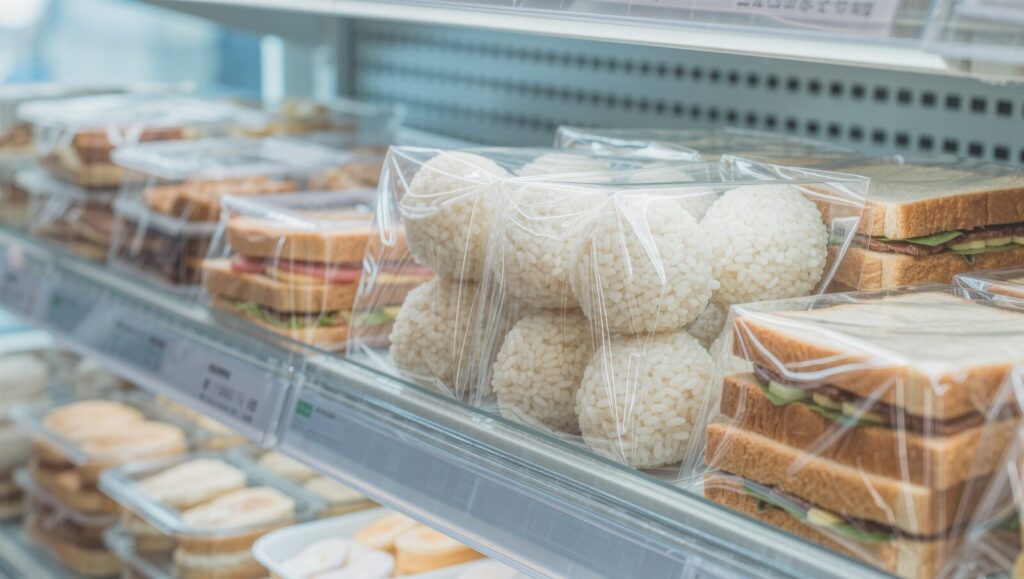
Japan's Food Labelling Standards require packaged food to show nine allergens. These are called tokutei genzairyō (特定原材料, "specified ingredients"). Cashew joined the list on 1 April 2026. Makers have until 31 March 2028 to update their packets, so some older stock may not show it yet.
| Japanese | Reading | English |
|---|---|---|
| えび | ebi | shrimp, prawn, lobster |
| かに | kani | crab |
| くるみ | kurumi | walnut |
| カシューナッツ | kashū nattsu | cashew (labels updating until March 2028) |
| 小麦 | komugi | wheat |
| そば | soba | buckwheat |
| 卵 | tamago | egg |
| 乳 / 乳成分 | nyū / nyū-seibun | milk (written 乳成分 on the label) |
| 落花生 / ピーナッツ | rakkasei / pīnattsu | peanut |
You'll see allergens shown in one of two ways:
- After each ingredient, like this: マヨネーズ(卵を含む), "mayonnaise (contains egg)".
- All together at the end, like this: (一部に小麦・卵・乳成分を含む), "(partly contains wheat, egg, milk)".
There are also 20 recommended items. Labelling them is voluntary, so many makers list them and some don't.
| アーモンド almond | あわび abalone | いか squid | いくら salmon roe |
| オレンジ orange | キウイフルーツ kiwi | 牛肉 beef | ごま sesame |
| さけ salmon | さば mackerel | 大豆 soy | 鶏肉 chicken |
| バナナ banana | ピスタチオ pistachio | 豚肉 pork | マカダミアナッツ macadamia |
| もも peach | やまいも yam | りんご apple | ゼラチン gelatin |
This is the part people miss. Bonito (かつお, katsuo) isn't on either list. So a vegetarian can't rely on the allergy line alone. Scan the full ingredients for かつお, 豚肉, 鶏肉 and ゼラチン.
🍙 What does the label law not cover?
This one matters most for anyone with a serious allergy.
The Consumer Affairs Agency's handbook says allergy labelling covers packaged food. It doesn't apply to:
- Restaurant meals and delivery. Restaurants aren't required to provide allergy information. The agency encourages them to share it, and many large chains do.
- Food sold loose, such as items by weight or from a counter without their own packet.
- Alcoholic drinks.
A few more rules are worth knowing:
- "May contain" wording isn't allowed. Instead, a maker may add a note like 本製品の製造ラインでは、落花生を使用した製品も製造しています。 That means "peanuts are also used on the production line for this product." If you see 製造ライン (production line) next to your allergen, read it as a cross-contact note.
- 小麦 means wheat only. The handbook says barley and rye aren't included. If you need to stay gluten-free, read the full ingredients list for those as well.
🍛 Which restaurant chains publish allergen charts?
If you have an allergy, chains are your easiest option. The big ones publish ingredient charts, and you get the same recipe at every branch.
| Chain | Who it suits | What's published |
|---|---|---|
| CoCo Ichibanya (curry) | Vegetarians and vegans who want a quick hot meal | English page with an allergy PDF. Vegetarian curry made "only using plant-based ingredients", 683 yen incl. tax as of 2026-11. Not every branch offers it |
| MOS Burger | Allergy travellers who want burgers | An English allergy list linked from its inbound page |
| McDonald's Japan | Travellers who want something familiar | English allergen and nutrition list. Some detail pages are in Japanese only |
Honestly, CoCo Ichibanya is the easy fallback for vegetarians. It's in most cities, and the plant-based curry takes the stock question off the table. A HappyCow reviewer summed it up: "We went here multiple times on our trip because they're everywhere, inexpensive and have vegan options!"
Before you order, look at the update date on the chart. McDonald's footnote, for example, refers to the 8 mandatory items from before cashew was added.
🛕 Is shojin ryori a good choice for vegans?
Yes, and it's the treat of the trip. Shojin ryori (精進料理) is Buddhist temple cooking. JNTO describes it as traditionally vegan.
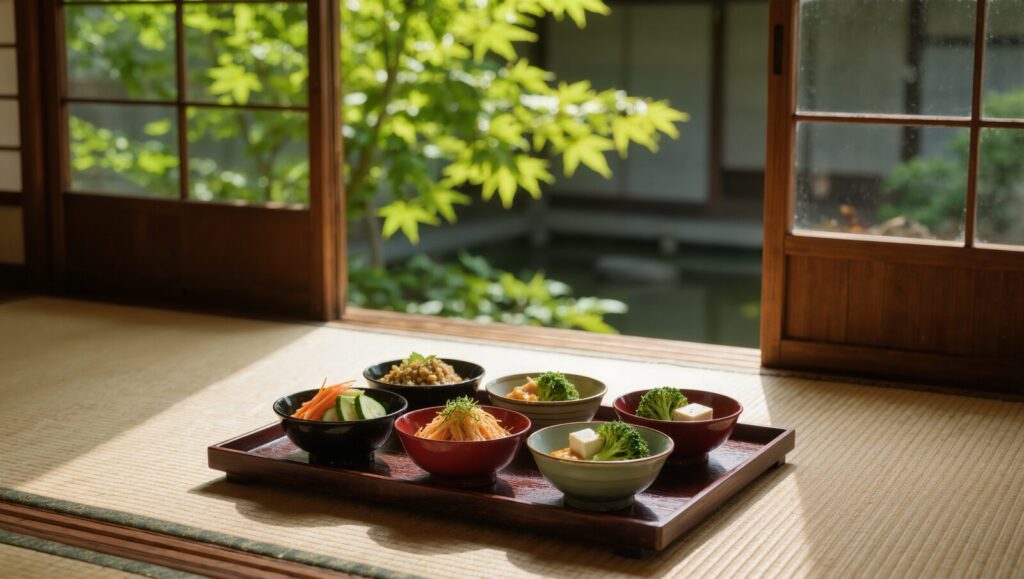
At Koyasan, a mountain temple town south of Osaka, JNTO lists 51 temples that offer overnight stays. Meals there leave out meat, fish, green onion and garlic. JNTO's vegetarian guide notes that some temples use dairy, so ask when you book. Book through the Koyasan Shukubo Association or the Koyasan Tourist Association, and book early.
My view: one temple night does more for a plant-based traveller than a week of searching for restaurants. It's the one meal where nobody needs a card.
For other nights, JNTO says ryokan (traditional inns) can prepare vegetarian meals if you tell them in advance. To find restaurants, JNTO suggests HappyCow, Vegewel and Japan VegeMap. It also suggests looking for a sticker on the door from The Japan Vegan Society, VegeProject Japan or The Japan Vegetarian Association.
🕌 What about halal and kosher?
JNTO's Muslim travel page says there is no central halal certification body in Japan, so check each place one by one. It lists the Japan Welcome Guide for Muslim Travelers and Halal Gourmet Japan as places to search.
Two things to watch for: mirin and cooking sake are common in seasonings, and JNTO notes that some miso contains alcohol unless it's labelled 無添加 (mutenka, "additive-free"). For kosher food, JNTO's vegetarian guide points to Kosher Japan.
📝 Your printable phrase card
Screenshot this and print it too. JNTO also recommends carrying a written card in Japanese.
Vegetarian:
私はベジタリアンです。肉・魚・えびやかになどの魚介類は食べられません。かつおだし・煮干し・ラードも食べられません。昆布だし・しいたけだしは大丈夫です。
(I'm vegetarian. I can't eat meat, fish or seafood such as shrimp and crab. I also can't eat bonito stock, dried sardine stock or lard. Kombu or shiitake stock is fine.)
Vegan, add:
卵・牛乳・バター・チーズ・はちみつも食べられません。
(I also can't eat egg, milk, butter, cheese or honey.)
Allergy:
私は重い食物アレルギーがあります。___を少しでも食べると危険です。この料理に___は入っていますか?
(I have a serious food allergy. Even a small amount of ___ is dangerous for me. Does this dish contain ___?)
Copy the Japanese word for your allergen from the table above into the blanks.
❓ FAQ
Is miso soup vegetarian in Japan?
Usually not. It's normally made with dashi, which often contains bonito. Ask for kombu dashi (昆布だし).
Are konbini rice balls safe for allergies?
Packaged ones carry the legal allergy labelling, so read the back of the packet. Anything sold loose from the counter isn't covered.
Do Japanese restaurants have allergen menus?
Many big chains publish them, but restaurants aren't legally required to. For smaller places, use the phrase card.
Is "vegetarian" understood in Japan?
The word is understood, but loosely. Name the specific items too, especially the stock.
Is cashew labelled in Japan?
Yes. It became mandatory on 1 April 2026, and labels are being updated until 31 March 2028.
🧳 Quick recap
- The tricky part is the stock and seasoning, not what you see on the plate.
- Learn the nine mandatory allergens, and look for かつお in the ingredients list.
- Restaurant meals and loose food aren't covered by the label law, so use the chain charts and your card.
- Book one shojin ryori meal, and tell your ryokan about your diet in advance.
- Before you fly, print your phrase card, and get a few snacks you've already checked so you have something easy to eat on day one.
Get the taste of Japan sent home

TokyoTreat — Japan-only snacks, monthly
- In the boxJapan-exclusive snacks, a drink and a snack guide
- Ships toWorldwide
- PlanMonthly, a new theme each time

Sakuraco — traditional sweets and tea
- In the box20 Japanese sweets, a tea pairing and a home-goods item
- Ships toWorldwide
- PlanMonthly, a new theme each time
Show sources
- 食物アレルギー表示に関する情報 — Consumer Affairs Agency, Government of Japan (accessed 2026-11-02)
- 加工食品の食物アレルギー表示ハンドブック — Consumer Affairs Agency, Government of Japan (accessed 2026-11-02)
- 外食・中食での食物アレルギーについて — Consumer Affairs Agency, Government of Japan (accessed 2026-11-02)
- アレルギーと食品/京都府ホームページ — Kyoto Prefectural Government (accessed 2026-11-02)
- A Vegetarian and Vegan Guide to Japan — Japan National Tourism Organization (JNTO) (accessed 2026-11-02)
- Muslim Travelers | Travel Japan | JNTO — Japan National Tourism Organization (JNTO) (accessed 2026-11-02)
- Koyasan Shukubo (Temple Lodgings) | Travel Japan — Japan National Tourism Organization (JNTO) (accessed 2026-11-02)
- CoCo ICHIBANYA English page — Ichibanya Co., Ltd. (accessed 2026-11-02)
- MOS BURGER | A hamburger chain born and raised in Japan — MOS Food Services (accessed 2026-11-02)
- McDonald’s Japan English menu — McDonald’s Company (Japan) (accessed 2026-11-02)
- Coco Ichibanya – Edogawabashi Station – Tokyo Restaurant – HappyCow — HappyCow (accessed 2026-11-02)

Keep reading
No Bins in Japan? Where to Throw Rubbish and How to Sort It
Why Japan has so few public bins, where to put your rubbish (konbini, vending machines, your hotel), and a sorting table with…
What to Pack for Japan in Summer: Humidity, Heat and Cooling Gear
Japan's summer is about humidity more than heat. What to wear, how many shirts, rainy-season dates by region, and the cooling gear…

Tattoos and Onsen in Japan: Rules, Cover-Ups, Where to Go
No Japanese law bans tattooed bathers. Learn the three tiers of onsen tattoo policy, how big a cover patch really works, and…