Shipping Japan Shopping Home: EMS, Surface Mail and Costs
What it costs to mail a box home from Japan by EMS, air, SAL or surface mail as of October 2026, plus the new US prepayment step.
On this page
- How much does it cost to mail a box home from Japan?
- How long does surface mail from Japan actually take?
- Is posting a box cheaper than paying airline excess baggage?
- Shipping to the United States: the step you cannot skip
- What can you not post home from Japan?
- Will you pay customs duty or tax when the box arrives?
- Why you cannot handwrite the label any more
- How big and heavy can the box be?
- A sensible way to do this
- Frequently asked questions
- Sources
Disclosure Some links on this page are affiliate links. If you buy through them we may earn a small commission at no extra cost to you. It never changes what we recommend.
If your suitcase will not close, mailing a box home from a Japanese post office is usually the cheapest fix, and surface mail is the cheapest option of all. As of October 2026, Japan Post lists a 5kg surface parcel to Europe, Canada or Oceania at 4,900 yen and to the United States at 5,400 yen, against 13,000 yen and 15,100 yen for the same box by EMS. The trade-off is time: surface parcels to North America and Australia are estimated at roughly two to three months, and anything bound for the United States now needs a customs declaration registered and duties prepaid before you hand the box over.
This guide covers what each Japan Post option costs, how long it takes, what you are not allowed to post, and the paperwork you have to finish before you reach the counter. All prices are Japan Post’s published yen rates as of October 2026.
How much does it cost to mail a box home from Japan?
Japan Post splits the world into five zones. Most readers of this site fall into two of them: Zone 3 covers Oceania, Europe, the Middle East and North America excluding the United States, which means the United Kingdom, Australia and Canada all sit in the same column. Zone 4 is the United States, including Guam and other US territories.
Here is what a 5kg box costs by each service, from Japan Post’s published rate schedules as of October 2026.
| Service | Zone 3 (UK, Australia, Canada) | Zone 4 (United States) |
|---|---|---|
| EMS (express) | 13,000 yen | 15,100 yen |
| Air parcel | 12,450 yen | 14,200 yen |
| Economy Air parcel (SAL) | 7,600 yen | 7,700 yen |
| Surface parcel | 4,900 yen | 5,400 yen |
Two things to note on those numbers. Japan Post states that its EMS rates for Zones 3 and 4 and its air parcel rates include tentative extra charges, so they can move when fuel and handling surcharges are revised. And Economy Air (SAL) is not offered to every destination, so confirm availability for your country before you plan around that middle price.
Scaling up roughly doubles the gap. A 10kg box by surface mail is 7,900 yen to Zone 3 and 8,900 yen to Zone 4 as of October 2026, while the same box by EMS is 23,500 yen and 27,100 yen. If weight rather than speed is your problem, surface mail is where the saving lives.
How long does surface mail from Japan actually take?
Japan Post publishes estimated delivery times per posting office. The table for Kawasaki Higashi Post Office puts surface parcels to the mainland United States at two to three months, to Australia at about two months, and to Vancouver at about two months.
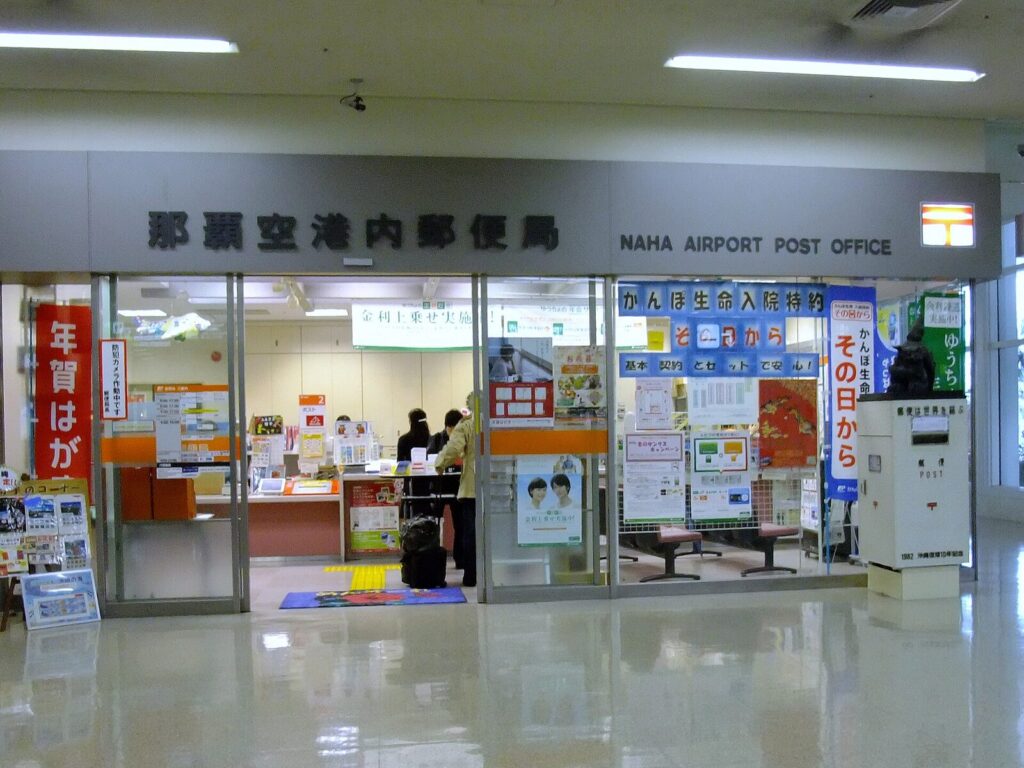
Japan Post is explicit that these are averages and that the table “does not in any way guarantee any exact number” of days. It also asks senders to expect a one-month buffer, because a parcel may wait for a ship to depart, and it notes that customs clearance can add further time.
So treat surface mail as a three-to-four-month plan, not a two-month one. It suits winter clothes, ceramics, books, stationery and anything you will not miss. It does not suit gifts you want to hand over next month.
Is posting a box cheaper than paying airline excess baggage?
Often, but it depends on your ticket, and you should price it rather than assume it. Airlines charge for extra checked bags per piece, and the amount varies by route, cabin, frequent-flyer status and where you pay. ANA and Japan Airlines both publish their current charges on their own baggage pages, and those pages are the only figures worth planning around.
The comparison to run is simple. Look up your airline’s charge for one extra checked bag on your specific route, then compare it with the surface and SAL rates above for the weight you would actually be shipping. Two points usually decide it.
- Weight. An extra airline bag has a fixed price up to its weight limit, so if you are filling 20kg or more, one extra bag can beat a 20kg surface parcel.
- Fragility and timing. A checked bag arrives with you. A surface parcel arrives months later and passes through two customs authorities, which is a real risk for anything breakable or perishable.
There is also a middle path worth considering: post the heavy, dull, sturdy things by surface mail and carry the fragile or urgent things in your bag.
Shipping to the United States: the step you cannot skip
This is the part that has changed most, and it is the reason a lot of older advice about mailing souvenirs home from Japan is now wrong.
Japan Post temporarily suspended acceptance of US-bound items containing goods for sale and gifts valued over US$100 from 27 August 2025, after a US executive order of 30 July 2025 ended duty-free de minimis treatment for most international mail with effect from 29 August 2025. Acceptance resumed on 14 April 2026, initially only at designated post offices, on condition that senders prepay US duties themselves.
Japan Post’s notice of 14 October 2026 sets out the current arrangement. From 15 October 2026, US-bound mail is accepted at, in its words, “in principle, all post offices,” excluding simplified offices that do not handle international mail. At the same time, the previous exemption for personal gifts valued at US$100 or less between private individuals was removed: Japan Post states that US Customs and Border Protection has advised that all postal items containing goods valued at US$2,500 or less are now subject to advance declaration requirements.
| What you are sending | Advance declaration | Duty and tax | Label |
|---|---|---|---|
| Letters and postcards | Not required | Exempt | Not required |
| Documents and gifts between individuals, US$100 or less | Required | Exempt, but registration still needed | DDP plus 13-digit number |
| Other goods, US$100 or less | Required | Dutiable | DDP plus 13-digit number |
| Goods over US$100 up to US$2,500 | Required | Dutiable | DDP plus 13-digit number |
| Anything over US$2,500 | Not required | Collected at destination from the importer | Not required |
In practice, to post a box of shopping to a US address you register the declaration through an app from a CBP-certified provider that Japan Post recommends. Japan Post names two: Zonos and SafePackage. You pay the estimated duties and taxes during registration, and the provider’s own service fee applies whether or not the contents turn out to be duty-free. Japan Post notes that the final decision on whether duty applies rests with CBP.
The label then has to show “DDP-” followed by the 13-digit declaration number, handwritten in the blank space at the top if it does not print automatically. Japan Post has also noted that labels created through its own International Mail My Page service do not link the DDP declaration ID to the mail item number, so for US-bound goods you create the label through the provider’s app instead.
One more threshold applies on the Japanese side: if the total content value exceeds 200,000 yen, Japan Post states you also need an export declaration to Japan Customs.
What can you not post home from Japan?
Two separate rule sets apply: Japanese postal law on the way out, and your own country’s import rules on the way in.
Japan Post’s list of articles prohibited by postal law includes alcohols and “cosmetics, liquors, and other products that contain 60% or more of alcohol”; materials with flash points not higher than 30 degrees centigrade, including certain paints, lacquers, rubber cements, turpentine and pine oil; and flammable gases such as butane, propane and acetylene. Explosives, strong oxidizers, toxic gases, strong acids, radioactive substances, poisons and pathogens are also on the list.
Notably, that page does not address aerosols or lithium batteries, which are the two things travellers most often ask about. If you are shipping a canned spray, a power bank or a device with a built-in battery, ask at the counter rather than assuming — and expect the answer to depend on the service and the destination.
Separately, Japan Post warns that some items are prohibited from import by particular countries and asks senders to check in advance. It gives liquor, tobacco and meat as the examples people most often attempt. The meat rule catches more than it looks: Japan Post states that where beef is prohibited, instant cup noodles, curry and instant consommé may not be sent either. That rules out a large share of the konbini and supermarket food people want to post home.
Where sources disagree, follow the stricter one. Japan Post’s postal-law page sets the alcohol limit at 60% or more by content, while UK government guidance states that alcohol over 24% ABV is prohibited in international mail to the UK, and that perfumes with a flashpoint below 60 degrees centigrade are banned. A bottle that is legal to post out of Japan may not be legal to post into your country.
Will you pay customs duty or tax when the box arrives?
Quite possibly, and it is the recipient who normally pays. The thresholds differ sharply by country, so check your own authority’s current page before you decide what to put in the box. The figures below are the published thresholds as of October 2026.
| Destination | Where the line sits |
|---|---|
| United States | No general de minimis exemption. Advance declaration and prepayment apply to postal goods valued at US$2,500 or less; above that, duty is collected from the importer at destination. |
| United Kingdom | Gifts over £39 attract import VAT; customs duty becomes payable above £135. The gift relief only applies private-person to private-person, must be occasional, and cannot have been paid for by anyone in the UK. |
| Canada | Goods worth CAN$20 or less are exempt from GST; gifts from family or friends abroad worth CAN$60 or less are exempt. Otherwise 5% GST applies, 13% HST in participating provinces, with PST varying by province. |
| Australia and elsewhere | Check the Australian Border Force or your national customs authority for the current threshold before you ship. |
Two traps are worth naming. First, UK guidance adds together the values of separate packages addressed to the same person, so splitting a haul into three boxes does not multiply your £39 allowance. Second, posting something you bought abroad to a friend does not make it a gift for UK customs purposes, even if it is addressed directly to them.
Why you cannot handwrite the label any more
Since 1 March 2024, Japan Post’s FAQ states that “EAD transmission to all countries/territories is mandatory” and that “handwritten labels will be no longer be available as of that date.” Electronic advance data means the sender and recipient details, contents description, weight and item number are transmitted electronically before the item travels.
For most destinations you do this through Japan Post’s free International Mail My Page service, on a phone or a laptop. Japan Post notes that if you create labels this way, the required number of customs declaration forms, CN22 or CN23, is printed automatically, so you do not prepare them separately. Handwritten labels survive only for letters and documents with no dutiable contents.
Practically, that means the paperwork happens before you get to the post office, on your own device, and you need working mobile data or WiFi to do it — which is worth knowing if you were planning to sort this out on the morning of a flight. Fill in a detailed description with the name, quantity and price of each item, as Japan Post asks; vague entries such as “gifts” invite customs delays at the other end.
How big and heavy can the box be?
For EMS, Japan Post’s size and weight table lists most destinations at a maximum 1.5m length, 3m for length plus girth, and 30kg. The United States is tighter on girth, at 1.5m length, 2.75m length plus girth, and 30kg. The United Kingdom and Canada are listed at 1.5m, 3m and 30kg.
Some destinations sit well below those figures, and the table lists certain Australian external territories at 1.05m and 20kg, so look up your own destination’s row rather than working from the general figures. Parcel services carry their own country-by-country weight limits, which Japan Post notes “vary by country.” If you are near a limit, ask at the counter before you tape the box shut.
A sensible way to do this
- Weigh and measure the box, then price surface, SAL and EMS for your zone and compare against your airline’s published charge for an extra bag.
- Pull out anything on the prohibited lists: high-proof alcohol, anything with a low flash point, meat and beef-derived foods including instant noodles and curry, and aerosols or batteries unless the counter confirms them.
- Check your destination’s duty and tax threshold and decide what value you are comfortable declaring honestly.
- Create the label and customs declaration online — International Mail My Page for most destinations, or the Zonos or SafePackage app for the United States.
- Take the box, the printed label and your passport to a post office that handles international mail.
Frequently asked questions
Can I still post souvenirs to a US address from Japan?
Yes. Japan Post resumed US-bound acceptance on 14 April 2026, and from 15 October 2026 accepts it at, in principle, all post offices other than simplified offices that do not handle international mail. You do have to register an advance declaration and prepay duties through a CBP-certified provider for goods valued at US$2,500 or less.
Is the US$100 gift exemption gone?
For advance-declaration purposes, yes. Japan Post’s 14 October 2026 notice states that gifts between individuals valued at US$100 or less were previously exempt from advance duty payment, but that CBP has advised all postal items containing goods valued at US$2,500 or less are now subject to advance declaration. Those gifts remain exempt from duty itself, but registration is still required.
Is SAL available to my country?
Not necessarily. Japan Post lists Economy Air (SAL) rates but states the service “is not available for some countries,” and it periodically suspends individual services to individual destinations. Check at the counter or on Japan Post’s country pages before you budget for the SAL price.
Can I post alcohol or food home?
Alcohol at 60% or more by content cannot leave Japan by post at all, and your destination may set a far lower limit — UK guidance bans anything over 24% ABV in international mail. Food is destination-dependent, and where beef is prohibited Japan Post states that instant cup noodles, curry and instant consommé cannot be sent.
How long should I allow for surface mail?
Plan on three to four months. Japan Post’s own estimates are two to three months to the mainland United States and about two months to Australia and Vancouver, but it asks senders to add a one-month buffer and says the figures are estimates rather than a commitment to any exact number of days.
Show sources
- Rate schedule (EMS: All Zones) — Japan Post (accessed 2026-10-27)
- Rate schedule, International Parcel Post: Third Zone — Japan Post (accessed 2026-10-27)
- Rate schedule, International Parcel Post: Fourth Zone — Japan Post (accessed 2026-10-27)
- List of EMS Size and Weight Limits — Japan Post (accessed 2026-10-27)
- Delivery days, International Parcel Post (Kawasaki Higashi Post Office) — Japan Post (accessed 2026-10-27)
- Change in acceptance conditions for mail to the United States (14 October 2026) — Japan Post (accessed 2026-10-27)
- Resumption of acceptance of mail to the United States, follow-up notice 2 (14 July 2026) — Japan Post (accessed 2026-10-27)
- Resumption of acceptance of mail to the United States (13 April 2026) — Japan Post (accessed 2026-10-27)
- Articles Prohibited to be Mailed by Postal Law — Japan Post (accessed 2026-10-27)
- Items that cannot be sent due to destination country restrictions — Japan Post (accessed 2026-10-27)
- How to complete a customs declaration form (CN22 / CN23) — Japan Post (accessed 2026-10-27)
- FAQ: EAD (Electronic Advance Data) — Japan Post (accessed 2026-10-27)
- Duties and import VAT on gifts — GOV.UK / HM Revenue & Customs (accessed 2026-10-27)
- Importing by mail or courier: paying duty and taxes — Canada Border Services Agency (accessed 2026-10-27)

Keep reading
Buying Matcha in Japan: Purchase Limits and Where to Find It
Matcha purchase limits in Japan are set shop by shop. Current prices, where to buy in Kyoto and Uji, and the 1…
Office Omiyage: Japanese Snacks That Survive the Flight
Buying Japanese omiyage for 20 colleagues? Compare boxed snacks by piece count, price and melt risk, plus customs and tax-free rules.
Daiso vs Seria vs Can Do: Japan 100-Yen Shop Haul Guide
Daiso, Seria or Can Do? Store counts, why a 100-yen item costs 110 yen, and how Japan's 1 November 2026 tax-free refund…